A wedding detail photograph becomes more personal when the team understands why the detail matters. Jewelry, a piece of clothing, a handwritten note or an ordinary object from someone you love can deserve attention for very different reasons. At an Indian destination wedding, begin with your own family’s meaning rather than a generic list of “essential” accessories.
Some things will look beautiful on their own. Others make more sense when photographed in use, being given, worn or held. Tell the photographer which kind of memory you want to preserve before items are packed away or passed to the next person.
Separate meaningful details from decorative details
Decorative details help describe the design of the celebration. Personal details help explain your connection to it. Both can belong in the collection, but they do not need identical coverage.
For example, an invitation may show the visual style of the wedding, while a note written inside a garment box may hold a different kind of value. That is an illustrative comparison, not a rule about what your family should consider important. If you would not miss a photograph of something, it does not need to become a task on the wedding morning.
Choose a small priority set. This leaves time to make the photographs thoughtfully and reduces the need to gather objects from several rooms during preparations. Our wedding photography shot-list guide can help you identify priorities without turning the day into an inventory.
Add a sentence of context to each item
Write down the object’s name, what you would like remembered, and whether that explanation is private. An item might be a new piece chosen for this wedding, a gift or a family heirloom. Do not rely on appearance to communicate that distinction.
Ask for the accurate names and spellings you want used. Cultural and religious meanings vary, and a photographer should not infer an object’s significance from its shape or from another wedding. If it should not be touched, opened, moved or photographed in a particular way, say so directly.
You can use this small record for each priority item:
- Item: a description that makes it easy to identify.
- Meaning: one sentence in your own words, if you wish to share it.
- Photograph: alone, being worn, or during a real interaction.
- Custodian: the person who brings it, handles it and takes it back.
- Boundary: anything that should remain unseen, unread or private.
Photograph an interaction when the relationship is the point
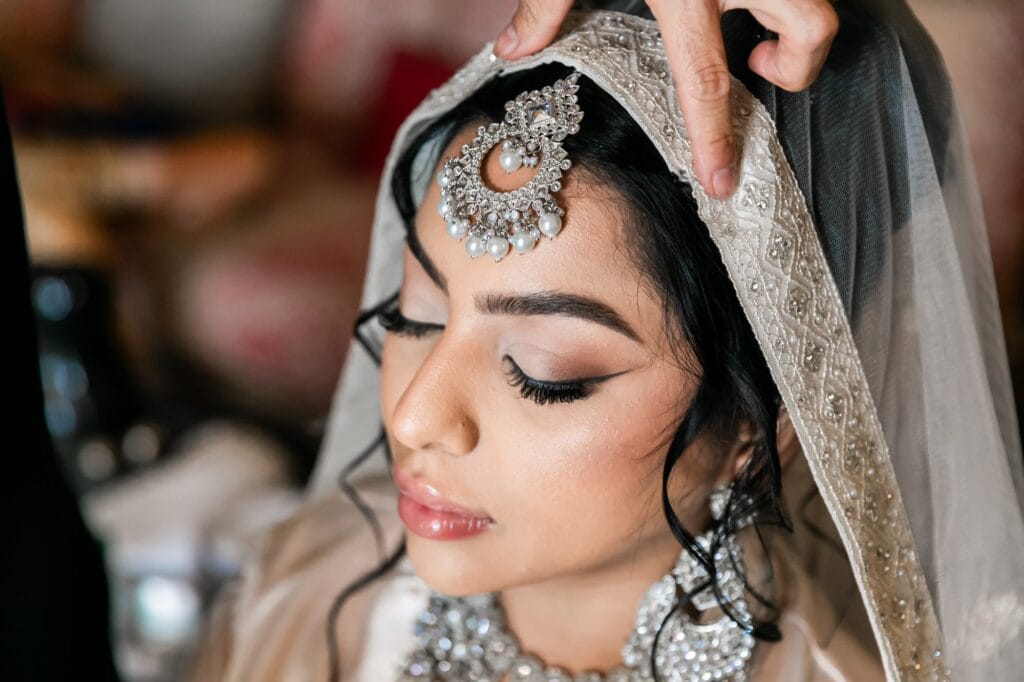
If a loved one will help you put something on, tell the team when that is expected to happen. The relationship may be more important than a perfectly arranged object photograph. Give the person enough room to help naturally rather than asking them to repeat the action for several cameras.
If the exchange happened before the trip, you can photograph the item as part of your finished look. There is no need to invent an exchange simply to create a story for the album. A short, accurate note can preserve the context without staging a substitute memory.
For portraits in which clothing and personal details are visible, our South Asian wedding posing guide offers ways to stay comfortable while giving the camera a clear view.
Agree on handling and return
Keep responsibility for valuable, fragile or religious items explicit. Having something photographed does not automatically transfer responsibility for its storage to the photographer. The owner or designated custodian should know when and where it is being used, and receive it back before the group moves on.
Avoid assembling important items in a busy shared area merely because the background is attractive. Ask the photographer how to work in a controlled, convenient place. If an object is difficult to move or photograph, a simpler image where it already belongs may be the better choice.
For destination preparations, check the plan after arrival: where the items actually are, which person has them, and whether the original idea still feels practical. Packing and travel can separate things that were together during planning.
Keep private words and identifying details private
A close photograph can make handwriting, addresses, room information or other personal details legible. Tell the team whether these should appear in a private collection, be kept out of frame, or be excluded from public sharing. A general request for “detail photos” does not answer those questions.
The real photographs in our South Asian wedding portfolio show how close details and wider interactions can sit together. The visible beauty of a piece does not tell us its family history; that meaning comes from you. Tell us which details you would like remembered, along with your wedding plans, so the photography brief can reflect what matters personally.