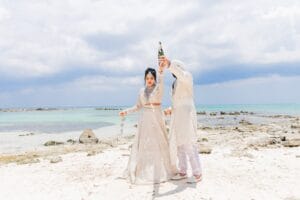
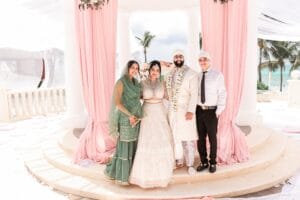
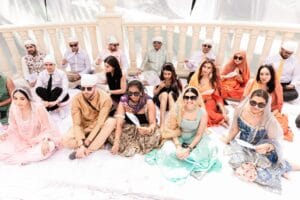
Couples often save hundreds of wedding photographs and then worry that they will not know what to do in front of the camera. The good news is that memorable South Asian wedding photography is not built by memorizing a long list of poses. It is built through trust, preparation, calm direction, and a visual plan that respects both the couple’s personality and the meaning of each event.
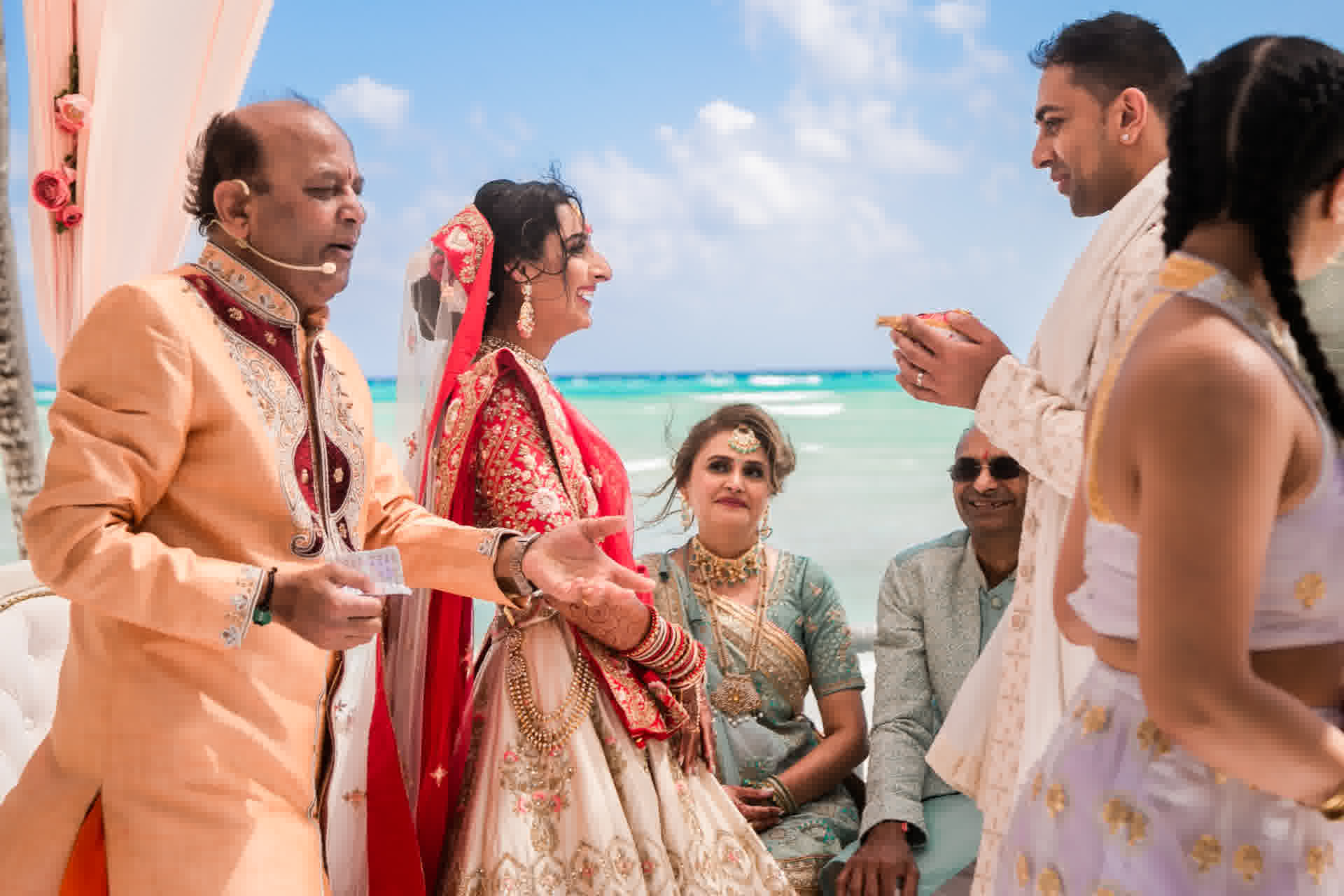
A multi-day celebration also needs more than one photographic language. Editorial portraits can highlight fashion, design, and presence. Documentary storytelling preserves rituals, movement, family reactions, and the moments no one could stage. The strongest gallery allows both approaches to support each other.
Replace pose lists with a visual intention
Before the wedding, describe how you want the photographs to feel. Words such as elegant, warm, energetic, intimate, cinematic, or joyful are more useful than copying isolated poses. They help the photographer understand whether to emphasize stillness, movement, closeness, architecture, fashion, or family connection.
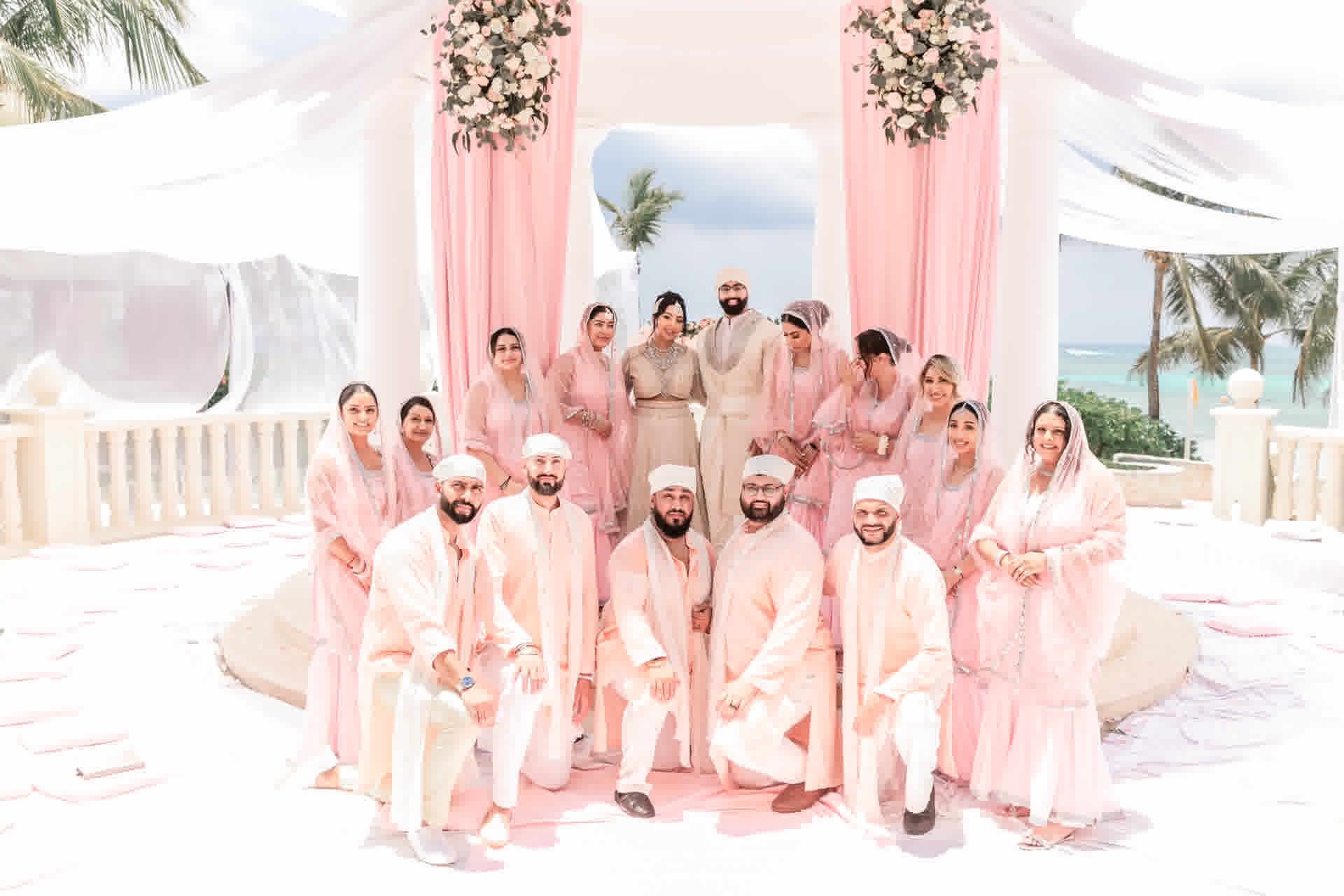
Share images you love, but also explain what you love about them. It might be the light, body language, composition, color, or emotional tone rather than the exact position. A reference becomes useful when it reveals a preference, not when it creates an obligation to reproduce someone else’s wedding.
Our approach to South Asian weddings in Cancun combines editorial portraiture with documentary storytelling across the scale and complexity of a multi-event celebration.
Learn a few foundations that look natural
Good direction usually begins with small adjustments. Posture, hand placement, the direction of the face, and the distance between two people can change a portrait without making it feel rigid. Your photographer should guide those details in language that is clear and encouraging.
Connect before looking at the camera
Many strong couple portraits begin with interaction. Walk together, adjust an accessory, share a quiet thought, or pause close enough to notice each other’s expression. Looking at the camera can then become one variation rather than the entire session.
Create shape through gentle angles
Turning slightly instead of standing completely square can add dimension and show clothing more clearly. The exact angle depends on the garment, light, location, and how the couple feels most confident. There is no single body position everyone must use.
Give hands a reason to be there
Hands appear natural when they connect to an action: holding one another, arranging a dupatta, touching jewelry, carrying flowers, or moving through the space. Calm direction should make those actions simple, not overly choreographed.
Plan portraits around attire and details
South Asian wedding clothing can include layered textiles, intricate embroidery, jewelry, turbans, dupattas, veils, garlands, and family-specific elements. Tell the photographer which details carry meaning and how they should be handled. Styling should respect the garment and the people who helped prepare it.
Build enough dressing time for final adjustments before portraits begin. If an outfit requires help to drape, fasten, or move, identify the person responsible and keep them nearby. A rushed transition can consume the portrait window and make the couple feel unnecessarily tense.
One recurring issue we see at real South Asian weddings is the final dupatta adjustment. The hairstylist does not always handle the drape, and younger brides who grew up outside India may not have someone immediately available who knows exactly how the family wants it placed. Decide in advance whether a mother, aunt, family member or stylist will be responsible. The same planning helps with the groom’s stole or turban. Ten minutes of preparation here can protect a much larger portrait window later.
Photograph the full look in several ways: a clean full-length portrait, closer details, movement, interaction with the partner, and moments with the family members connected to the attire. The guide to a smooth Riviera Maya getting-ready experience explains how room preparation and timing support these images.
Use movement to create energy
Walking, turning, dancing, or gently moving fabric can create relaxed expressions and show how clothing behaves. Movement should fit the surface and the couple’s comfort. Sand, stairs, wet areas, fitted garments, and delicate jewelry may require a slower or more supported approach.
Small movement often works better than a dramatic instruction. A few steps, a change of direction, or a pause after laughter can create several distinct photographs. Video benefits from these transitions as well, which is one reason photo and video teams should share the same visual intention.
For Sangeet, Baraat, and reception dancing, avoid trying to pose every second. Tell the team about important people and planned moments, then let documentary coverage preserve the real energy. A photographer can offer quick guidance for one strong group frame without turning the celebration into a prolonged session.
Organize family portraits without losing the day
Family photographs are often among the most valuable images and one of the easiest parts of the timeline to underestimate. Create a concise priority list using names and relationships. Group combinations should reflect the families involved rather than a generic template.
Assign one helper from each side who recognizes the people on the list and can gather them discreetly. Schedule immediate-family portraits at a time when those relatives are dressed, present, and not responsible for another ritual. Larger groups may work best immediately after a ceremony if everyone is already together, but the exact plan should follow the venue and family schedule.
Keep the formal list focused, then let documentary coverage capture broader relationships throughout the weekend. Our Cancun wedding photography timeline guide helps couples protect portrait time without sacrificing the experience.
Respect ceremony boundaries and real emotion
Ceremonies are not portrait sessions. The visual team should know where it may stand, which moments have restrictions, and how the family and officiant want the ritual documented. Confirm those expectations before the wedding rather than correcting camera positions during a meaningful moment.
Couples do not need to perform emotion for the camera. Focus on the ceremony and the people around you. Documentary photographs become powerful because attention remains on the experience. If one symbolic portrait is desired after a ritual, schedule it separately and confirm that the timing and handling of ceremonial elements are appropriate.
Xavier Bau Weddings is a Cancun-based bilingual photo and video team with more than 15 years of destination wedding experience and more than 1,200 weddings documented. We provide calm direction when portraits need structure, then step back when real moments need space. We coordinate visual priorities with planners, and vendor-fee support is available on select collections.
Prepare without over-rehearsing
An engagement or pre-wedding session can help a couple learn how the photographer communicates, but it is not a requirement for looking natural. A planning call can also cover preferred sides, comfort concerns, height differences, mobility needs, family dynamics, attire, and the balance between directed and candid photographs.
Do not spend the wedding monitoring every angle. Choose a team whose work and communication you trust, share the important context, and return your attention to the celebration. Confidence grows when the process feels collaborative rather than corrective.
Frequently asked questions about South Asian wedding poses
Do we need to practice poses before the wedding?
No. It can help to discuss preferences and practice moving comfortably in your clothing, but the photographer should provide clear direction based on the light, setting, and couple.
How long should couple portraits take?
The answer depends on the number of outfits, locations, travel, light, and desired variety. Build the portrait plan with the photographer and planner, including transition time rather than using a generic duration.
How can we make family portraits faster?
Create a focused list with names and relationships, appoint informed family helpers, confirm the location, and schedule the groups when participants are already present and dressed.
What if one of us feels awkward on camera?
Tell the photographer before the wedding. Calm, specific direction, small movements, and attention on your partner can feel more natural than holding unfamiliar poses.
Can we have both editorial and candid photographs?
Yes. A thoughtful timeline can protect short directed portrait windows while leaving ceremonies and celebrations open for documentary storytelling. Discuss the balance you prefer before the wedding.
If you are still choosing your photography team, read our Indian wedding photographer in Cancun guide for ceremony coverage, resort logistics and multi-day photo-film planning. If you want calm direction, editorial portraits, documentary storytelling and planner timeline coordination, contact Xavier Bau Weddings.