Groom getting-ready photographs work best when there is room for the person, not just the finished outfit. For an Indian destination wedding, that could mean a quiet portrait, friends helping with a jacket, a family member adjusting a meaningful detail, or a few minutes together before leaving for the ceremony.
Start by asking the groom which parts of his preparations matter. Clothing and customs vary between families and celebrations. A sherwani, turban, suit, particular accessory or specific ritual should only enter the plan if it is actually part of his wedding.
Choose the people before making a list of objects
Who does he want nearby while getting ready? It might be a parent, sibling, friend or a small group. Ask whether that person will already be in the room or needs to arrive from elsewhere. This often matters more than setting out every accessory at once.
A meaningful interaction does not need to be staged. If someone is helping with a genuine part of dressing, make sure the photographer knows where and when it will happen. If everything will be ready before coverage begins, plan a relaxed portrait together instead of recreating an event simply because it appears on a generic shot list.
Tell the photographer about any privacy preferences. Some people welcome photographs while dressing; others prefer coverage to begin once they are fully dressed. Either choice can produce a complete and personal story.
Give the room one useful area
Choose a part of the room with space for the people involved and, where available, a useful window or uncluttered background. Keep luggage, meal packaging and garment bags together in another area so nobody spends the whole session moving objects around.
That does not mean making the room look unused. The point is to let relationships and clothing be easy to see. If the room is crowded or the light is difficult, ask the photographer about alternatives close by. Confirm access to any shared hotel space before treating it as a private portrait location.
Keep delicate or valuable pieces with the person responsible for them. A photographer can work with an object without taking over its safekeeping. If someone must handle or arrange a particular garment or religious article, tell the team rather than leaving them to guess.
Build a sequence with a beginning and an exit
- Before the final adjustments: a view of the room and the people who are present.
- During a real interaction: help with clothing, a greeting or a conversation, where welcome.
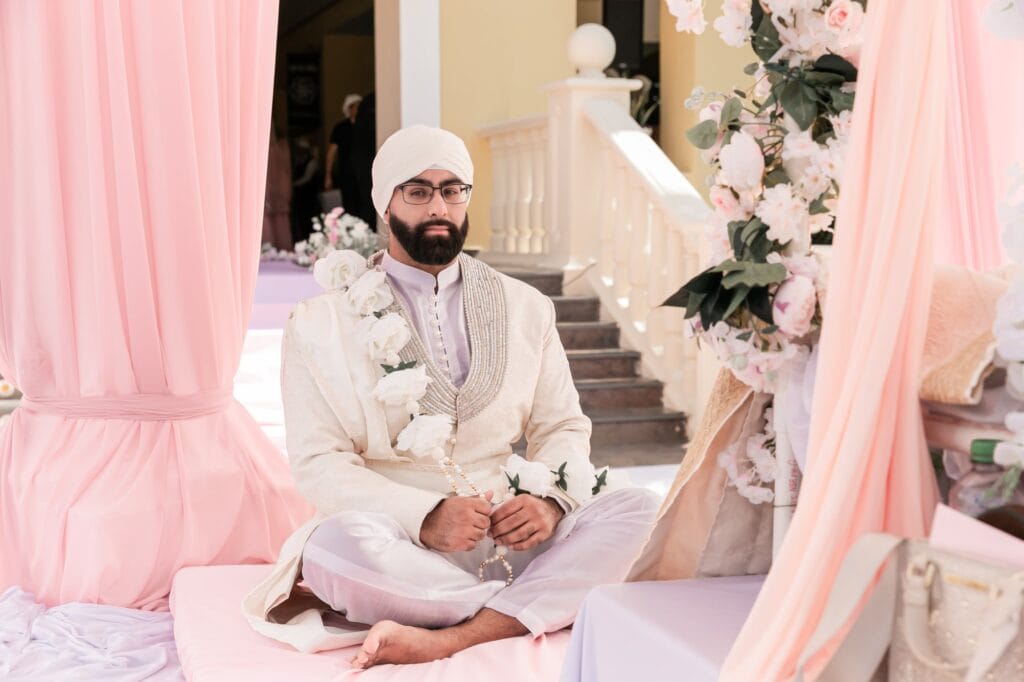
- Once dressed: a simple individual portrait and photographs with the people he has chosen.
- Before departure: a check that essential personal items are with their owner and everyone knows the meeting point.
- At the handoff: a clear route from preparations to the next part of the celebration.
Treat this as a possible sequence, not five compulsory pictures. The groom might prefer two strong portraits and time with his friends. Another person may want more of the preparations documented. The plan should reflect that difference.
Protect coverage when both partners get ready at once
At a resort, two preparation rooms that look close on a map can still involve corridors, elevators or different buildings. Share the actual locations and overlapping activities with your team. Ask who will cover each place and what happens if one preparation runs later than expected.
Our destination wedding photography shot-list guide helps distinguish important moments from long lists of standard pictures. For the broader event structure, consult the three-day Indian wedding timeline and adapt it to your own ceremony and travel arrangements.
Avoid solving a coverage conflict by asking everyone to dress much earlier without considering comfort and the real schedule. Sometimes the answer is different staffing; sometimes it is a shorter portrait sequence or a change in meeting location. Discuss the tradeoff before the day.
A personal brief to send your photographer
I would like photographs with the people helping me get ready, one relaxed portrait once I am dressed, and a few moments with my friends before we leave. Please check with me before moving personal or religious items. My main priority is the interaction with the people present, rather than a long set of accessory photographs.
Replace that sample with his own priorities. Add names, how to pronounce them, who is helping with clothing, and the next meeting point. If a baraat is part of the plans, use the separate Cancun baraat planning guide for that transition rather than assuming every groom will have one.
Five details to confirm the week of the wedding
- Exact room or suite number and access rules.
- Who will be present and who is helping with clothing.
- Which personal or religious items should not be moved without permission.
- When the groom needs to leave for the next event.
- Whether both partners are getting ready at the same time in different locations.
Browse our South Asian wedding portfolio to see individual portraits alongside family and ceremony photographs. Tell us how both of you will prepare for your destination wedding, and we can discuss coverage that gives each person’s story appropriate space.