A Baraat can be one of the most energetic parts of a South Asian destination wedding. Music builds, relatives gather, friends dance, and the arrival becomes a celebration of its own. In Cancun, that movement can unfold against tropical architecture, gardens, terraces, or coastal views. The setting is exciting, but a smooth procession depends on detailed coordination long before the first song begins.
There is no single format that fits every family. The participants, music, transportation, rituals at the arrival, and level of formality vary by tradition and personal preference. Confirm the meaningful elements with your family, officiant, and planner, then adapt the logistics to the property and season.
Define the procession your family actually wants
Begin by deciding who participates, where the procession starts, how long you want it to feel, and what happens at the end. Some families envision a compact gathering with live percussion. Others want a longer dance route, a vehicle entrance, or a horse as part of the arrival. Each choice creates different needs for access, sound, safety, timing, and photography.
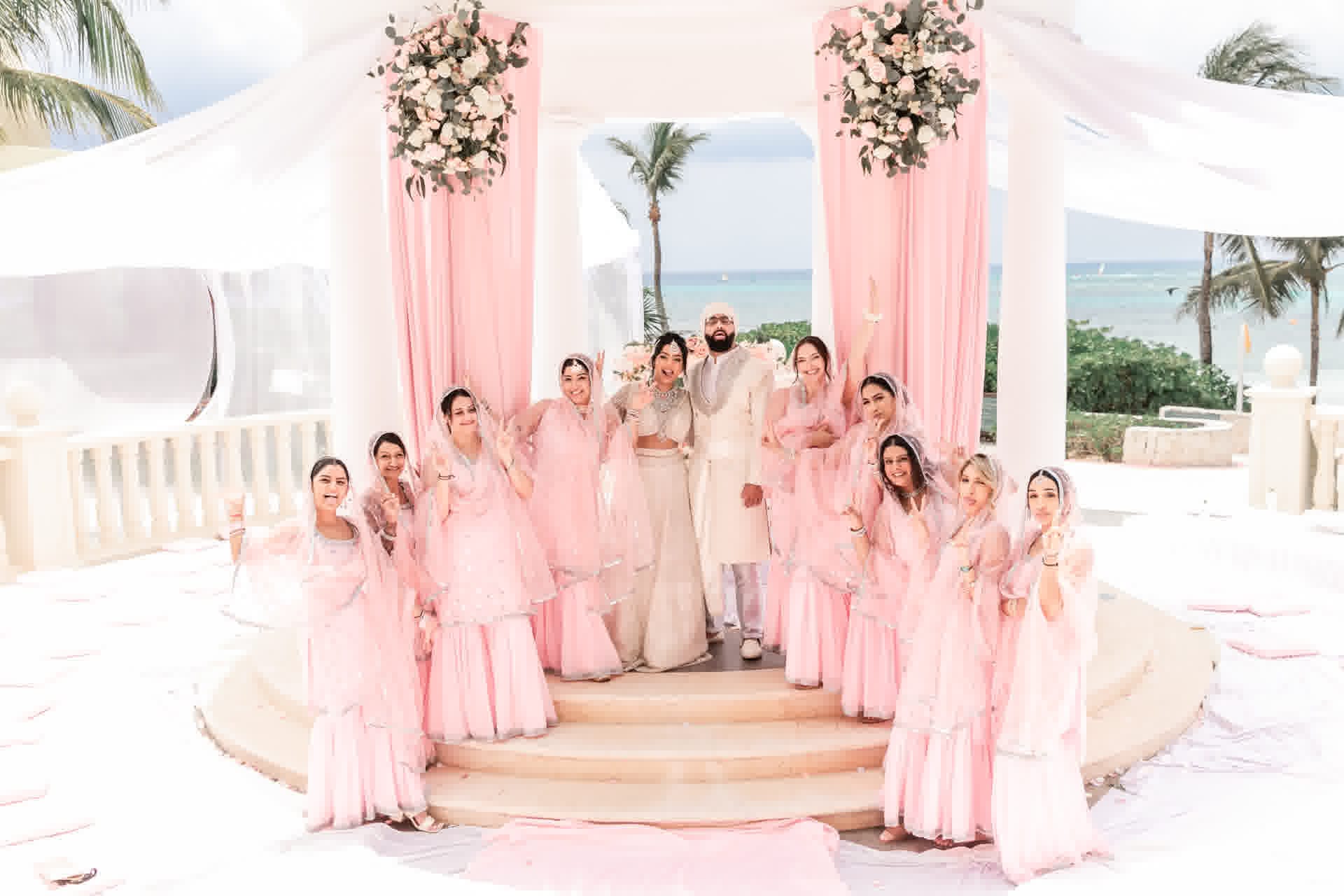
Ask family representatives to identify any prayers, greetings, exchanges, or welcome rituals that follow the procession. The Baraat does not end simply because the music stops. The transition into the Milni, ceremony, or another family-specific moment deserves its own time and space.
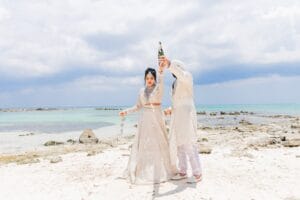
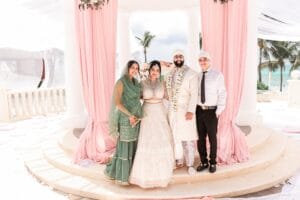
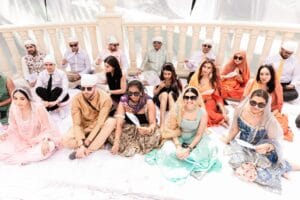
Our overview of South Asian weddings in Cancun shows how editorial portraiture and documentary storytelling can cover both energetic and quiet moments.
Approve the complete route before production begins
Walk the proposed route with the planner and venue team. Confirm the starting area, gathering point, turns, stairs, narrow passages, guest crossings, sound boundaries, final stopping point, and an alternate route. A route that looks simple on a map may change once decor, resort operations, other guests, or production equipment are considered.
Measure movement, not just distance
Dancing groups move differently from ordinary foot traffic. They pause, expand, form circles, and respond to music. Build the schedule around that behavior rather than estimating the route as a normal walk. Include time for participants to assemble and for the key person making the entrance to get into position.
Keep access clear for every generation
Not every guest will want to dance the full route. Establish a comfortable viewing or joining point for relatives who prefer a shorter distance. Discuss mobility needs privately and create an option that lets everyone feel included without calling unwanted attention to them.
Plan the arrival as a separate scene
The end point should have enough room for dancing to resolve, family members to gather, and any welcome ritual to happen clearly. Avoid placing the final moment in a tight doorway where guests, cameras, musicians, and ceremony participants compete for the same space.
Keep music coordination at the right level
Decide whether the procession uses live percussion, a DJ-supported format, or another family-approved approach. The planner, venue, and entertainment lead should confirm who owns the music plan and how it fits the approved route.
The separate DJ and production plan should manage playlists, sound systems, technical cues, and equipment backups. For photography and video, share the route, participant sequence, family priorities, and final welcome transition. That is enough context for the visual team to anticipate the story without taking over entertainment production.
Evaluate horse or vehicle options responsibly
If a horse is meaningful to your vision, ask your planner to verify that the property, route, timing, provider, and conditions are appropriate. Animal welfare, surface stability, noise, crowd behavior, handler access, and weather should be part of the decision. A beautiful photograph is never more important than a safe and humane plan.
Discuss a calm mounting and waiting area away from dense dancing, plus an alternative if conditions change. If a horse is not suitable, a decorated vehicle, golf cart where approved, or a walking entrance can still feel distinctive. The emotional energy comes from the people and the welcome, not from one required prop.
All transportation choices should be confirmed through the planner and venue. They can determine what is feasible for the selected route without relying on assumptions from social media.
Choose timing for comfort and visual quality
Direct tropical sun can affect guest comfort, camera angles, and the pace of dancing. Review the route at the same approximate time of day as the wedding. Look at where shade falls, how reflective surfaces behave, and whether the final arrival places the couple or family facing strong light.
The Baraat also needs to connect realistically to dressing, portraits, ceremony preparation, and guest seating. Avoid compressing the procession because an earlier event ran long. The Cancun photography timeline guide explains how buffers and transitions protect the day.
Prepare a rain and heat alternative with the planner. The alternative might adjust the start time, shorten the route, use a covered area, or change the production format. The exact response should follow current conditions and property guidance.
Give photography and video room to tell the full story
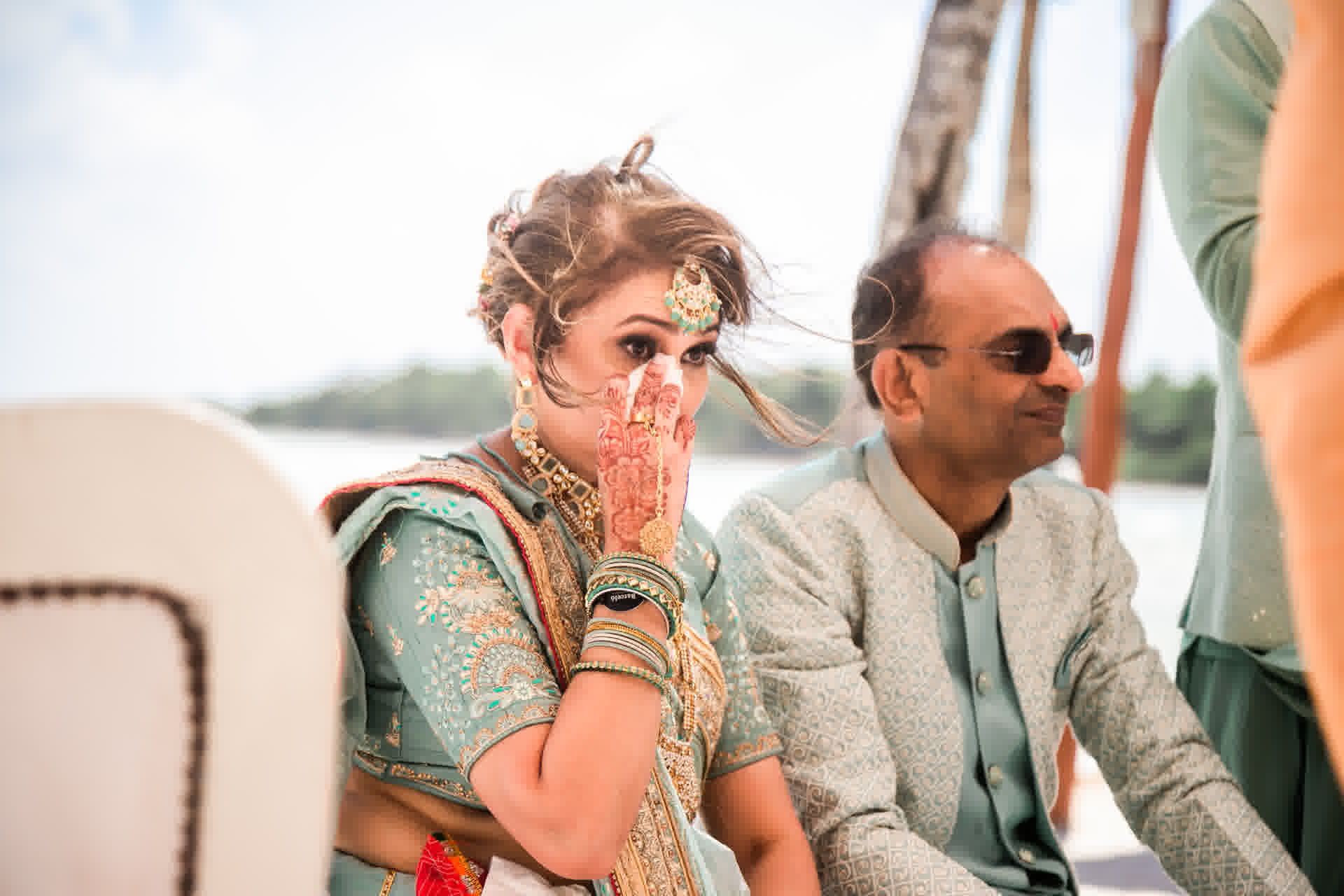
A Baraat is not only a wide scene of dancing. It is also a sequence of individual stories: a parent’s anticipation, friends creating a circle, hands keeping rhythm, clothing moving, and the first expression at the welcome. Documentary coverage needs freedom to move ahead, beside, and behind the procession without creating hazards.
Tell the visual team who will lead the Baraat, which relatives are central, how the entrance will happen, and what follows. If the couple wants editorial portraits with the transportation element or musicians, schedule them separately so the live procession remains spontaneous.
Xavier Bau Weddings is a Cancun-based bilingual photo and video team with more than 15 years of destination-wedding experience and more than 1,200 weddings documented. We combine calm direction for intentional portraits with documentary storytelling during moments that should unfold naturally. Our team coordinates timeline priorities with planners, and vendor-fee support is available on select collections. For broader coverage planning, see our Indian wedding photographer in Cancun guide.
Frequently asked questions about a Cancun Baraat
How long should a Baraat last?
There is no universal duration. Route length, group size, music, weather, property access, and family traditions all matter. Build the timing after the route is approved and include assembly plus the welcome transition.
Can we have a horse for a Baraat in Cancun?
It may be possible in some circumstances, but it must be evaluated and approved for the specific property, route, provider, weather, and animal welfare plan. Ask your planner to coordinate those checks and keep an alternative ready.
What information does the photo and video team need?
Share the approved route, start and end points, key participants, family priorities, welcome rituals, and backup plan. The entertainment and production teams can manage music and technical details.
How can older relatives participate?
Create a shorter joining point, comfortable viewing area, or transportation option based on individual needs. Discuss the plan with those relatives rather than assuming what they prefer.
What happens if it rains?
Use the approved backup created with the planner and venue. It may involve a covered route, a shorter procession, adjusted equipment, or a revised start time depending on current conditions.
For calm direction, editorial portraits, and documentary coverage of your Baraat, contact Xavier Bau Weddings.