You may be happy to have your wedding photographed and still want parts of it to remain private. A personal letter, a child, a relative with a sensitive situation, or a quiet getting-ready moment can call for a different conversation from your plans for public couple portraits.
A wedding photography privacy brief helps you explain those preferences before the celebration. It is a planning document to discuss with your team alongside the written agreement, so expectations about recording and sharing do not depend on assumptions.
Separate recording from sharing
Start with three questions: What are you comfortable having photographed or filmed? Who should receive the finished material? What, if anything, are you comfortable seeing in public? The answers may differ.
For example, a hypothetical couple might want a private letter recorded for their own film but prefer that no excerpt appears in a public post. Another might welcome professional photographs during preparation but ask the team to step out while dressing. Each preference is easier to follow when the moment and boundary are stated clearly.
Do not leave the meaning of “private” unexplained. Say whether you mean no recording, restricted sharing, no names, no real-time posts, or a conversation before publication. Ask the provider to confirm what can be agreed and how it will be documented.
Make a brief with specific situations
Spaces and moments
Identify when a room should be free of cameras, which personal words need separate discussion, and who can give the team a clear signal.
People
Describe any guest-photography preferences that need attention and provide a discreet way to recognize the relevant person.
Delivery
Discuss who receives gallery or film access and whether different selections are appropriate for different audiences.
Public use
State your preferences for names, tagging, location details, private words and the kinds of images you would want discussed before public sharing.
Timing
If you prefer no real-time sharing or want to announce the marriage yourselves first, explain that timing clearly.
Only include the personal background someone needs to act on the request. “Please check with us before sharing photographs that show this guest” can be more appropriate than distributing their private story to every vendor.
Choose one discreet contact
Appoint someone who can clarify a preference while you are occupied. That person might be the planner or a trusted family member. Confirm which decisions they may make and which must wait for you.
Keep sensitive notes separate from a broadly circulated schedule. Your photography priority list can identify that a private conversation is needed without including the details. The same approach helps with complicated relationships in a family portrait plan.
Ask how the relevant notes will reach any additional photographers, filmmakers or other team members who need them. A preference explained only to one person may be difficult to follow when several people are working in different spaces.
Give private words their own discussion
Letters, vows, interviews and speeches may reveal more than a photograph. Before recording a private exchange, clarify whether it is intended for an edited film, a private recording, or neither. If translation or transcription is involved, discuss who would need access to the material to complete that work.
Our wedding audio planning guide helps identify which voices and moments need preparation. Add the privacy preference at the same time as the recording request so the two remain connected.
Include guests and other suppliers in the communication plan
Your photographer’s brief does not automatically reach guests, a makeup artist, a planner’s social team or other suppliers who may make their own photographs. Decide which message each group needs to hear and who will communicate it.
Keep guest wording simple. You could say, “We are keeping the celebration offline until we share our own announcement. Please wait before posting photographs or tagging us.” Use a message that reflects your actual preference, including when it ends or who to ask if someone is unsure.
No communication plan can account for every guest action. Its value is in making your preferences understandable and giving people a respectful way to follow them.
Review the brief before the wedding
Check whether circumstances have changed since booking. Confirm the final contact, the moments requiring special handling, and any agreed sharing process. Keep the finished brief short enough that the people responsible can use it.
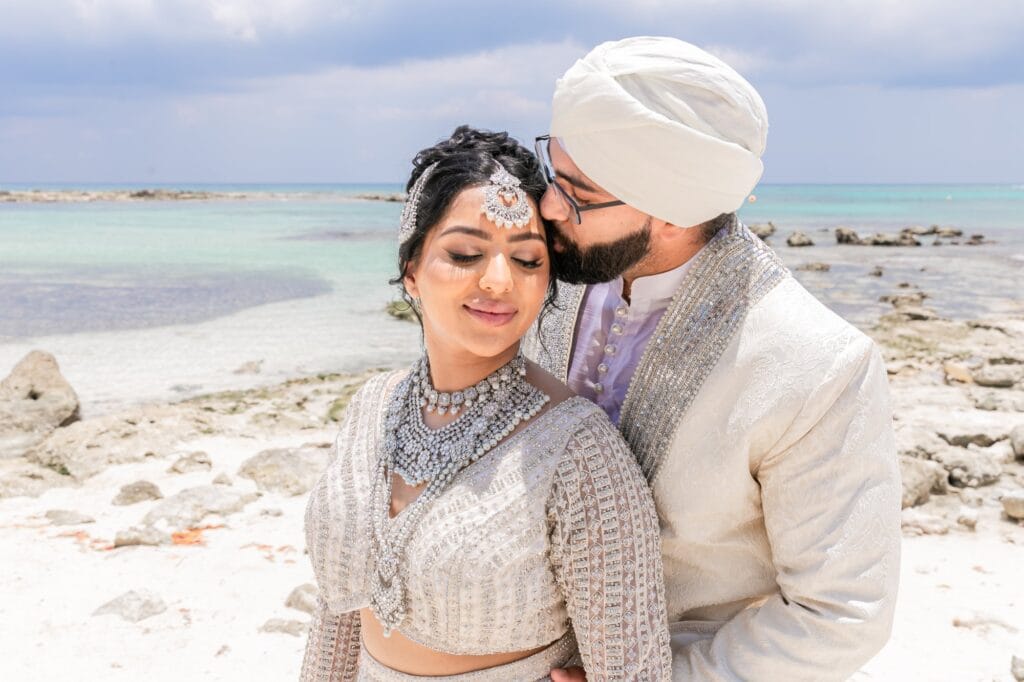
Explore our South Asian wedding photography and cinema in Cancun to understand the visual approach, then discuss your own comfort and sharing preferences with Xavier Bau Weddings. The right time to raise a boundary is while the plan can still be shaped around it.