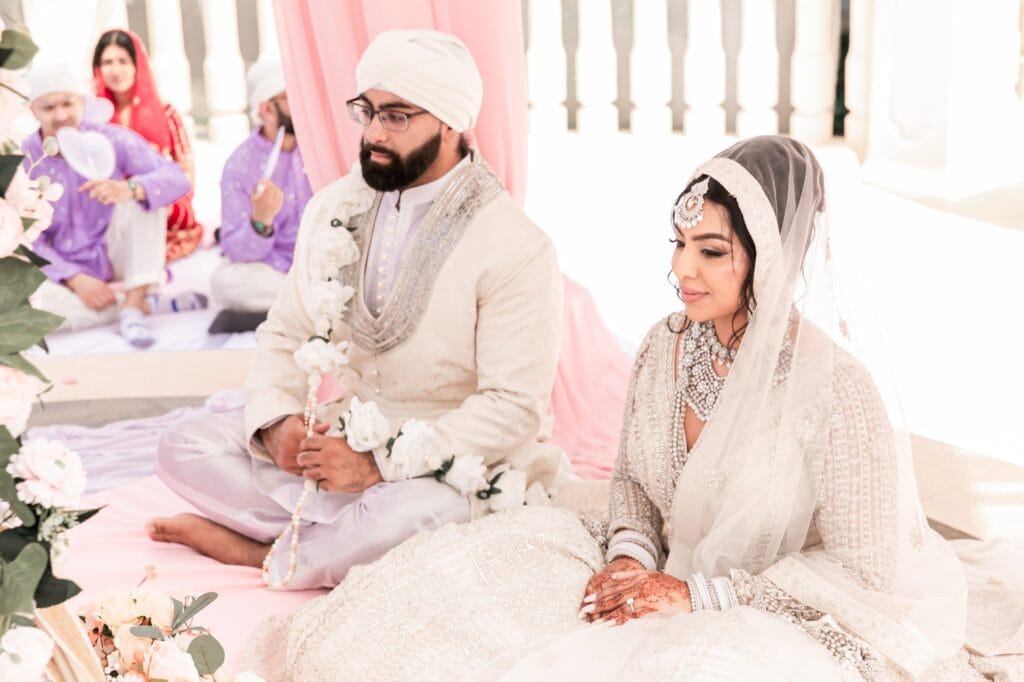
An unplugged wedding ceremony is a request for guests to put cameras and phones away for a defined part of the celebration. For a Hindu or Sikh wedding, that preference should be discussed alongside the actual ceremony plan, with the couple and the people responsible for leading it.
Hindu and Sikh ceremonies are distinct, and families may have different expectations within each tradition. A guest-phone request should support those expectations, not substitute for them. Start by explaining what you want the experience to feel like and where phones could affect the view or atmosphere.
Decide which part of the celebration the request covers
“Unplugged wedding” can sound like a rule for the entire day. Be precise if you mean only the ceremony. Clarify whether guests may take photographs before it begins, after it ends, or during a separately arranged opportunity.
You may have more than one ceremony during the wedding. A request that applies to one does not automatically apply to another. Record the preference in each ceremony brief so the planner, officiants and creative team understand the same boundary.
Also distinguish putting phones away from avoiding public posts. A guest can respect an unplugged ceremony and still publish photographs taken later. If delayed sharing matters to you, communicate that as a separate preference.
Coordinate the wording with the ceremony leaders
Ask who is the appropriate person to introduce the request and when they can do so without interrupting the ceremony. It might be included in a welcome message, an announcement before the start, or guest information shared in advance. Confirm the wording and timing with the people leading your particular ceremony.
Discuss professional camera positions separately. An unplugged request does not mean the photography and film teams may stand anywhere. Confirm permitted movement, positions and any recording boundaries in advance, then incorporate them into the shared photography priorities.
Use a warm request that explains the reason
A short message is easier to remember than a list of prohibitions. For example:
We would love to see your faces and share this ceremony with you. Please put phones and cameras away while it takes place, and enjoy these moments with us. Thank you for being here.
If you intend to provide a way for guests to see selected photographs later, you can mention it once you have decided how that will work. Avoid promising immediate delivery or unrestricted gallery access unless those arrangements have been confirmed.
Send the request through channels your guests will actually read. A quiet sign may reinforce it, but relatives who do not notice the sign should still hear the same message from a welcoming human voice.
Plan for individual needs without a public confrontation
Some guests use their phone for communication or assistance. Others may be managing an urgent personal situation. Give the planner or a designated guest contact a way to discuss exceptions privately so no one feels singled out in front of the gathering.
If remote family participation is important, agree on one specific approach rather than allowing several guests to improvise video calls from different positions. Confirm who handles it and where they can be. Do not assume a phone connection replaces a planned recording; the wedding film audio guide covers the separate preparation needed for meaningful words.
Protect sightlines with the seating plan as well
Phones are only one part of a clear view. Discuss guest seating, the route of any entrance, and the positions from which the couple and important relatives can be seen. The planner and creative team can review those practical details together within the ceremony’s boundaries.
Tell the team which relatives’ reactions are especially important. This is useful context when there are several directions to watch at once. It should not become a request to interrupt a ritual or move people during a meaningful moment.
After the ceremony, a defined time for organized family photographs can give relatives a clear opportunity to gather. Let the professional team finish an arranged group before several guests call for different poses or directions.
Choose who handles a gentle reminder
The couple should not spend the ceremony watching for phones. Agree beforehand who can quietly remind a guest if necessary. The response should remain proportionate; a single raised phone is not a reason to stop the experience or embarrass someone.
Your preference works best when it is part of thoughtful preparation and the atmosphere remains welcoming. View our South Asian wedding photography in Cancun and Riviera Maya, then share your ceremony and guest-photography preferences with Xavier Bau Weddings. We can discuss how those preferences fit the photographic plan.