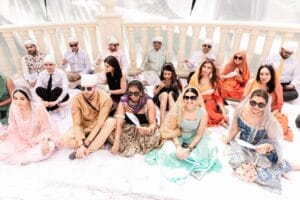
Nusaibah and Jai’s wedding photographs at Barceló in the Riviera Maya move through several distinct settings: preparations, a Sikh ceremony framed by pale pink drapery, photographs with family and friends, coastal portraits, and an evening celebration. The collection offers more than a single beautiful backdrop. It shows how people, clothing and light give different parts of a wedding their own character.
This is a photo story drawn from their actual photographs by Xavier Bau Weddings. You can also explore the Nusaibah and Jai gallery within our South Asian wedding portfolio.
Begin with the person and the small details
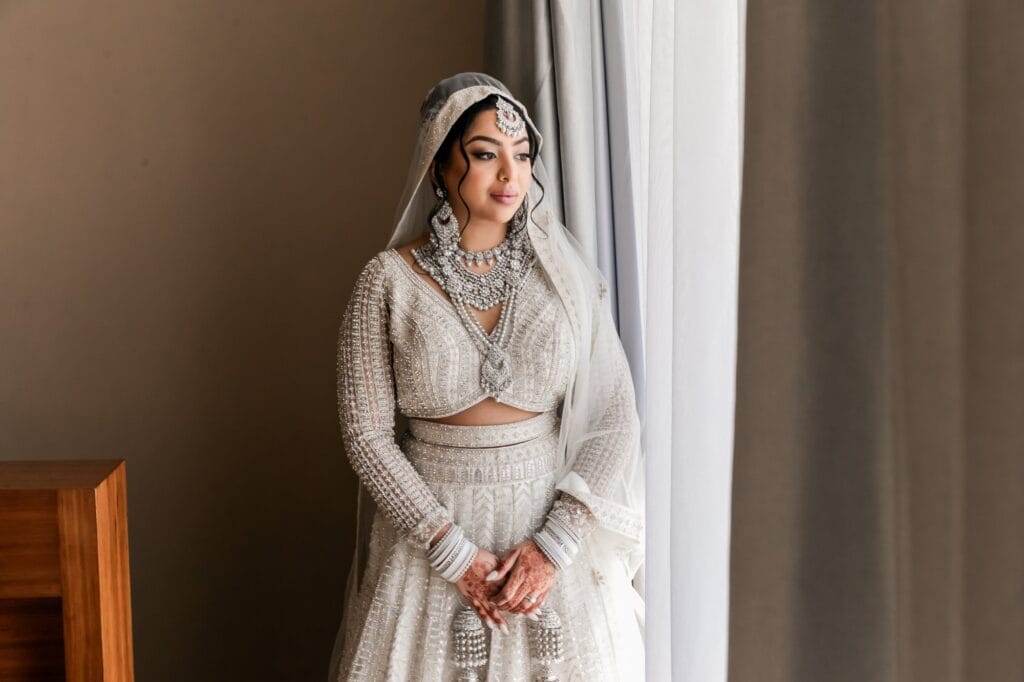
The preparation photographs include Nusaibah with her bridal party in matching robes, a close view of henna-covered hands, and the final adjustments around her face and jewelry. A portrait beside a window then shows her finished ceremony look. Together, these images move from company and detail to a more composed individual photograph.
The close photographs do not have to explain every object to be valuable. They preserve visible texture, hands and expression. The wider preparation image adds the people around her, making that part of the collection feel connected to the rest of the day rather than a separate fashion study.
For your own wedding, that suggests a useful question: which details would you like to see clearly, and which people belong in the photographs with them? The answers should come from your own relationships and choices.
Show the ceremony at more than one distance
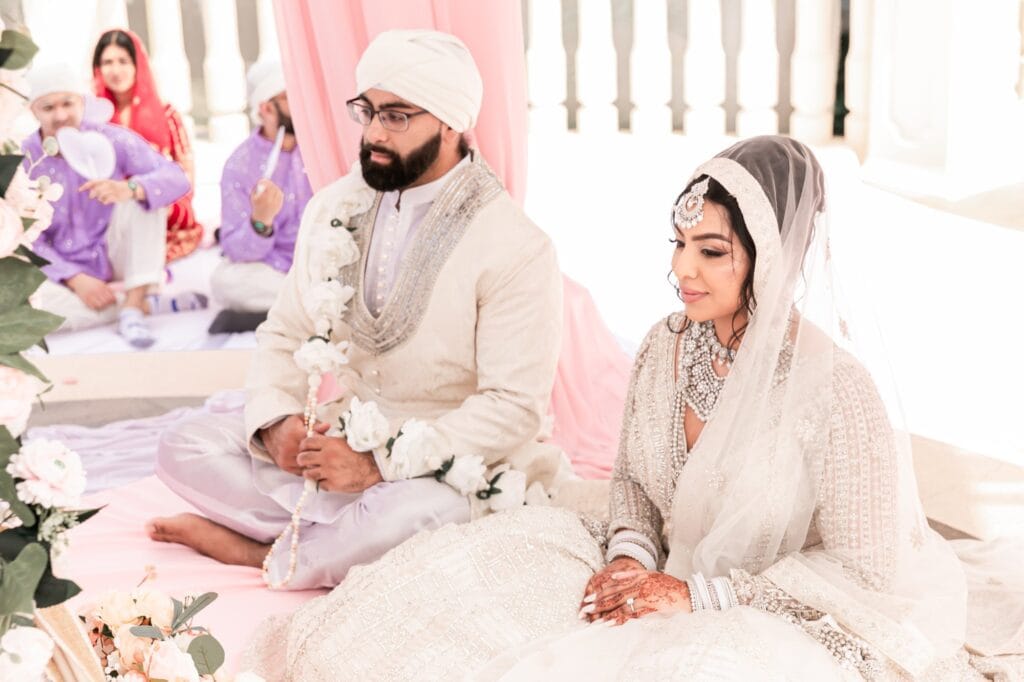
The ceremony photographs place Nusaibah and Jai within a pale circular setting, with flowers, pink fabric and guests gathered around them. A wide view makes the arrangement understandable. Closer frames show the couple seated together, family interactions, and musicians within the ceremony setting.
These different distances serve different purposes. The wide image describes the place and the gathering. A closer photograph keeps attention on faces and gestures. Neither replaces the other; their value becomes clearer when they are seen together.
For your own Sikh wedding, share the planned ceremony with your photographer and ask the officiant to confirm camera positions and movement. The photographs should follow the celebration as your family and ceremony leaders have arranged it.
Let family photographs change in mood
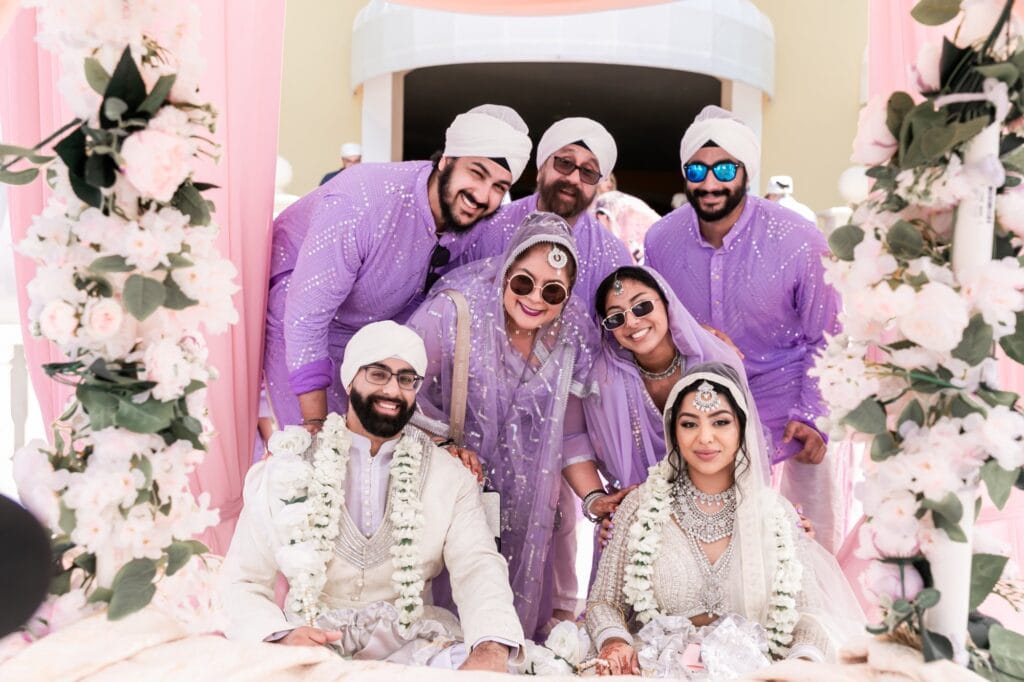
Nusaibah and Jai’s collection includes composed groups around the ceremony structure as well as closer photographs with laughter, sunglasses and people leaning together. The change of mood gives the gallery variety without needing a new location for every picture.
The pink and lavender clothing seen across several groups creates a visible connection, while the expressions make each photograph different. Those images are also a reminder that an orderly group portrait and an informal moment with the same people can both deserve a place in the finished collection.
If you are deciding which relationships to prioritize, our South Asian wedding family-photo planning guide offers a practical way to organize the people. The objective is to create space for meaningful photographs, not to keep everyone in position indefinitely.
Give the coastal setting room to breathe
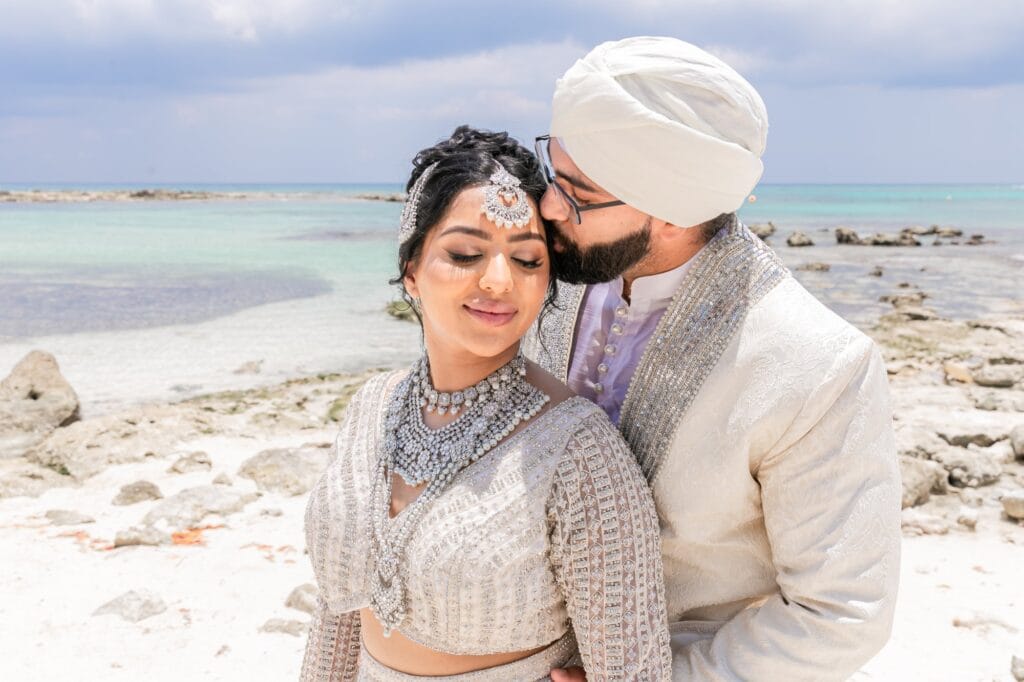
The coastal portraits place Nusaibah and Jai against water, a broad sky and a rocky shoreline. Some images show the full scene; others move close enough to concentrate on their connection. Their light-toned clothing remains part of the visual continuity with the ceremony, even as the background changes.
The photographs demonstrate the difference between using a place as context and making it the entire subject. A broad view records the setting. A close portrait can remove most of that setting while retaining the feeling between the two people.
For your own planning, consider how light, variety and movement affect portrait-location choices. These photographs show this wedding’s setting and conditions; they are not a promise that any particular hotel location or appearance will be available for another event.
An evening chapter with a different visual character
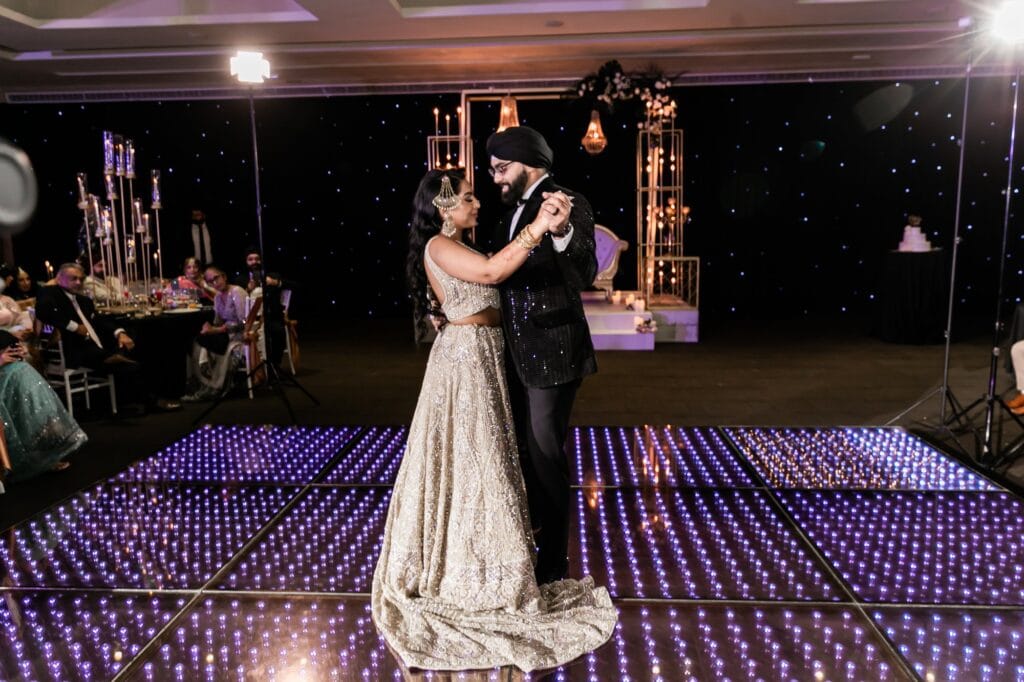
Later photographs show Nusaibah and Jai in different clothing, with deeper colors and stronger contrasts around them. Red walls, patterned openings and a decorative chair create a distinct portrait setting. Reception images then bring the couple, family and friends together around the stage and dance floor.
The contrast with the ceremony photographs helps the collection feel complete. It does not require every scene to have the same brightness or background. The couple and their relationships provide continuity while the surroundings describe a different part of the celebration.
What this real wedding can help you plan
- Photograph preparations at both detail and relationship level.
- Show the ceremony from wide context and close emotional distance.
- Plan family portraits that include both formal groups and relaxed interactions.
- Use the coastline as context without making every portrait about the beach.
- Let reception lighting and clothing create a distinct final chapter.
Explore more of these moments in the full mini-gallery of Nusaibah and Jai. If you are planning a Sikh or another South Asian wedding in Cancun or the Riviera Maya, tell us your dates, venue and celebrations. We can discuss photography and film around the story that is actually yours.