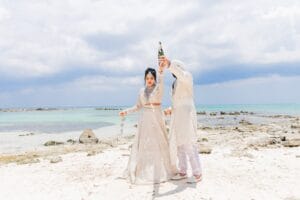
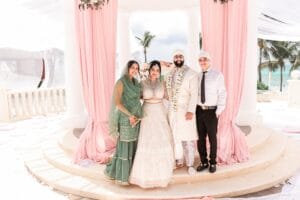
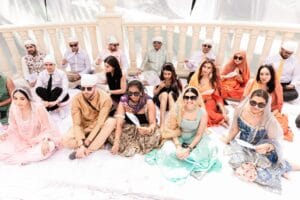
The best wedding photography locations in Cancun are not always the places with the widest ocean view. A strong portrait location must also offer workable light, enough privacy for the couple to stay present, reliable access, and a natural place in the wedding timeline. A beautiful background loses value if reaching it creates stress or removes you from the celebration for too long.
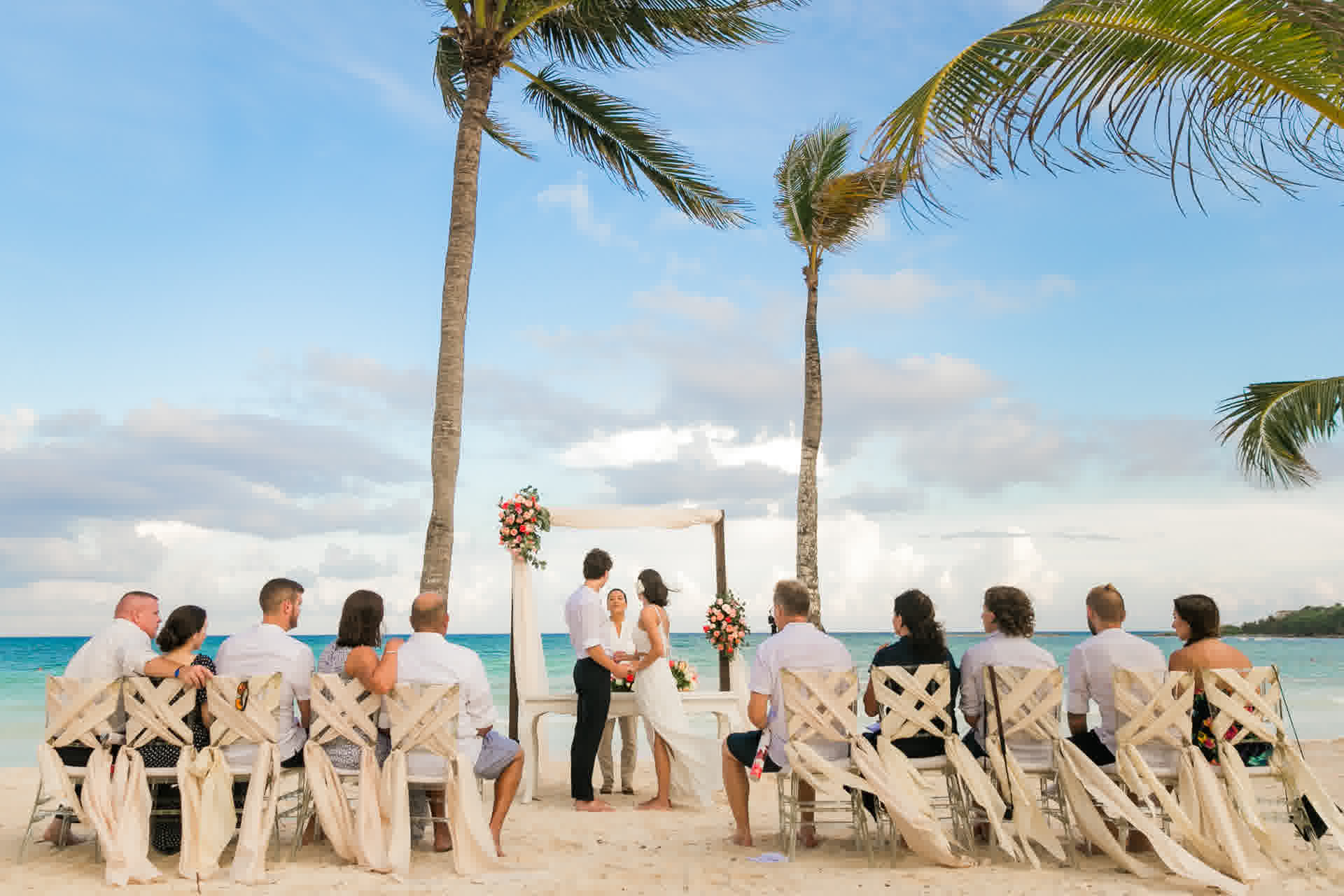
This is a decision guide rather than a list of named venues. It will help you evaluate the spaces available at a resort, hotel, villa, or nearby portrait location without competing with our separate hotel and private villa comparison. Always confirm access, permissions, and current property rules with your planner or venue.
Think in Visual Zones, Not One Perfect Spot
A varied wedding gallery usually comes from a small group of complementary zones. Look for one clean preparation space, one architectural or shaded portrait area, one setting connected to the ceremony, and one evening environment. These zones can often exist within the same property.
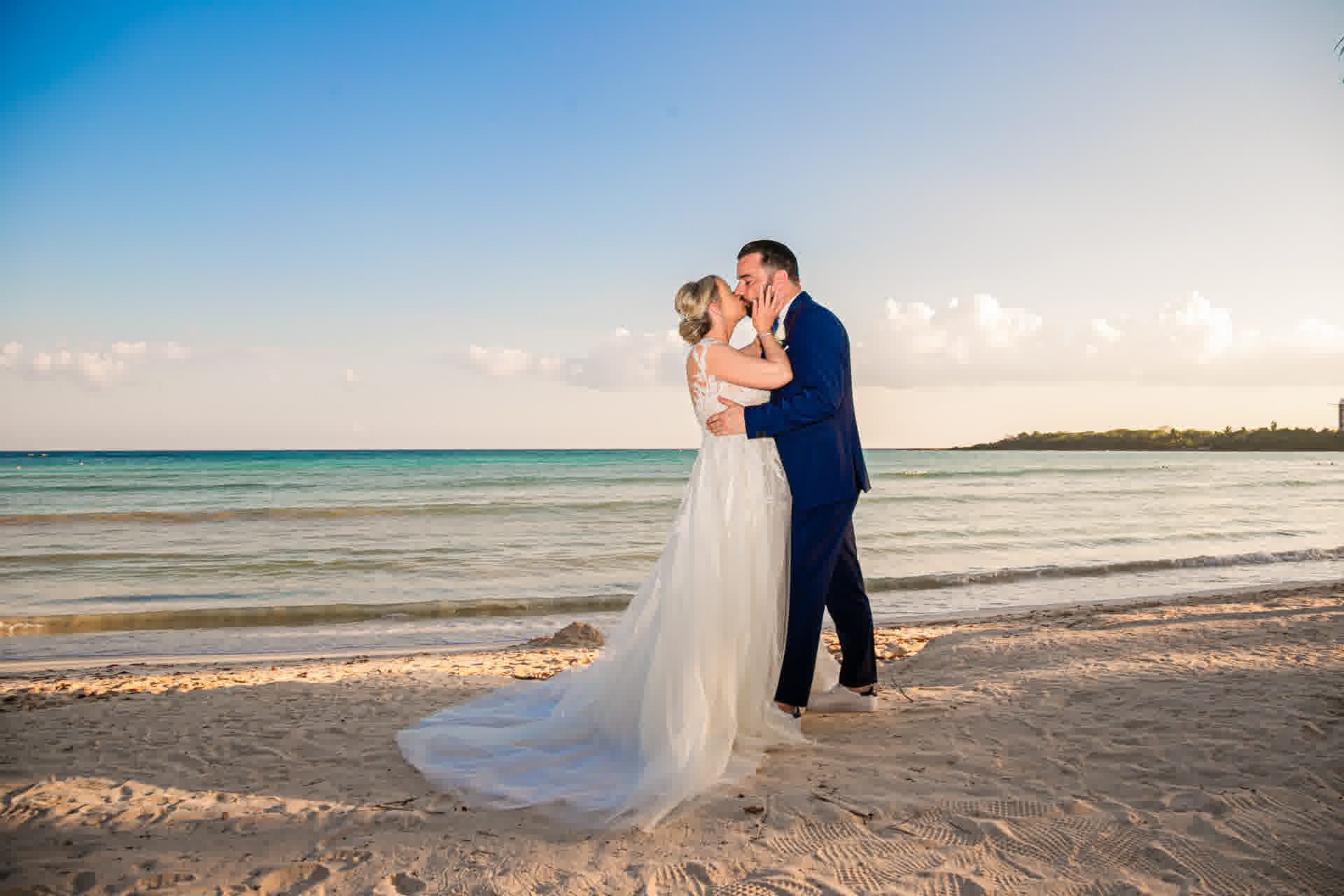
Choosing zones gives the team options when guest traffic, light, or the schedule changes. It also prevents every portrait from relying on the beach. Cancun and the Riviera Maya can offer water, palms, terraces, corridors, textured walls, gardens, interiors, and reception lighting. The goal is not to use all of them. The goal is to select a coherent set that supports the story.
Preparation zones with calm backgrounds
For getting ready photographs, evaluate window direction, available floor space, wall color, and visual clutter. A simple room with good organization can photograph more elegantly than a larger room filled with luggage and people. Decide where personal details, final dressing, and family interactions will happen before the team arrives.
Portrait zones with shade and depth
Open beach light can be intense during part of the day. Covered walkways, terraces, courtyards, and interiors may provide softer conditions and architectural depth. Your photography team can assess how a location works at the time it appears on the timeline, not only how it looked during a morning tour.
Evening zones with atmosphere
After sunset, reception spaces, entrances, and selected architectural areas can add a different visual chapter. Ask what spaces remain accessible once events begin and whether moving there would interrupt dinner or dancing. A brief evening portrait can add variety when it fits naturally.
Evaluate Light at the Correct Time
A location should be evaluated for the hour when it will actually be used. Sun direction, reflected light, shade, and guest activity change throughout the day. A terrace that feels quiet during a site visit may be an active event route later. A beach view that looks inviting at noon may work better for portraits closer to the ceremony or during another planned window.
Use your wedding date and timeline as planning inputs, while remembering that conditions can vary. Our guide to the best months for a Cancun wedding offers broader seasonal context, but no date removes the need for flexible portrait options. Build a primary route and an alternate route that share a similar mood.
Choose Between On-Property and Off-Site Portraits
On-property portraits usually protect guest time and simplify movement. They can be especially effective when preparation, ceremony, and reception spaces already provide different visual textures. Walk the route with your planner and note access points, elevators, stairs, guest pathways, and places where the couple can pause privately.
An off-site location can make sense when it has personal meaning or supplies a visual quality unavailable at the venue. It also adds transportation, access, transition, and touchup considerations. Ask whether the added location materially improves the story. If it does, give it a defined purpose and a realistic place in the timeline rather than treating it as an optional detour.
Build a Portrait Route That Protects the Celebration
A portrait route is the ordered sequence of spaces the couple and team will use. Keep it compact. Start near the couple’s current location, move through one or two complementary zones, and finish where the next wedding event begins. This reduces backtracking and lets documentary coverage continue around the portraits.
Prepare family groups separately from couple portraits. Family photographs benefit from one accessible, consistent location and a clear list. Couple portraits can then move with less coordination. If a second portrait window is planned, use it for a different quality of light or atmosphere rather than repeating the same images.
Look through complete wedding stories to see how locations function across an entire day. Notice transitions between quiet preparation, formal ceremony, directed portraits, and unscripted reception moments. The value is in the sequence, not a single dramatic frame.
Use a Five-Part Location Check
Before finalizing any wedding photography location in Cancun, review five elements with your planner and creative team:
- Light: What direction and quality of light are expected at the planned time?
- Flow: How long does the full transition take from the prior event to the next?
- Access: Who must approve the space, and are there current restrictions to confirm?
- Privacy: Can the couple interact naturally without avoidable guest traffic?
- Backup: Is there a nearby alternate with a compatible visual mood?
Xavier Bau Weddings is a Cancun-based bilingual photo and video team with more than 1,200 weddings documented. We combine editorial portraiture and documentary storytelling, use calm direction, and coordinate the portrait route with the planner’s timeline. That process helps the selected locations serve the experience rather than control it.
Frequently Asked Questions About Cancun Portrait Locations
Do all our portraits need to be on the beach?
No. A balanced gallery can combine interiors, architecture, shaded areas, ceremony surroundings, and evening atmosphere. Choose spaces that fit your visual preferences and timeline.
When should we select portrait locations?
Discuss priorities early, then confirm the route once the venue layout and timeline are clear. Access and current property rules should be verified close enough to the event to reflect accurate information.
Is an off-site portrait session worth the extra movement?
It can be when the place has personal meaning or adds a distinct visual quality. Compare that value with transportation time, access needs, and time away from guests.
What happens if our preferred location is unavailable?
Use a preselected alternate with similar light and mood. The planner and creative team should know both routes so the change does not become a new decision during the wedding.
How many portrait locations should we choose?
Usually, a few purposeful zones create more coherence than a long list of stops. Prioritize visual variety, short transitions, and enough time to be present in each space.
Want help turning your venue into a calm, visually varied portrait route? Contact Xavier Bau Weddings and share your date, venue, and current timeline.