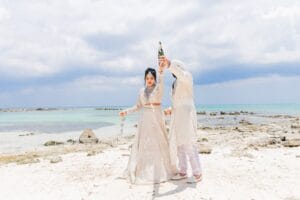
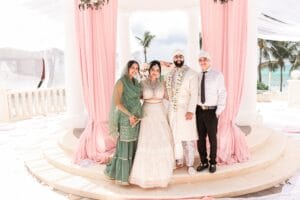
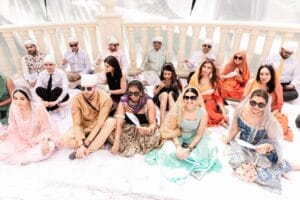
Documentary wedding photography emphasizes events as they unfold. Editorial wedding photography often includes intentional direction, composition and styling. At an Indian destination wedding, both approaches can belong in the same collection: an uninterrupted ceremony, spontaneous family interactions and a carefully composed portrait need not look or feel like separate weddings.
These labels are used differently by different photographers. Instead of choosing a word alone, decide how much direction you want at specific moments, what should remain untouched, and how you want the finished photographs to look together.
Separate three choices that are often mixed together
Direction is what happens while photographs are made. A photographer might suggest standing closer to a window, adjust the arrangement of a group, or simply observe. Tell them which kinds of guidance would make you comfortable.
Composition is how the image is organized. A candid photograph can have a precise composition. A directed portrait can feel relaxed. “Editorial” does not have to mean stiff expressions, and “documentary” does not mean that every image is visually casual.
Editing is the finished interpretation of light and color. Brightness, contrast and color treatment are separate from whether the moment was posed. If accurate garment colors matter to you, review how different fabrics and skin tones appear throughout a complete gallery, including indoor and evening photographs.
Choose the approach by part of the celebration
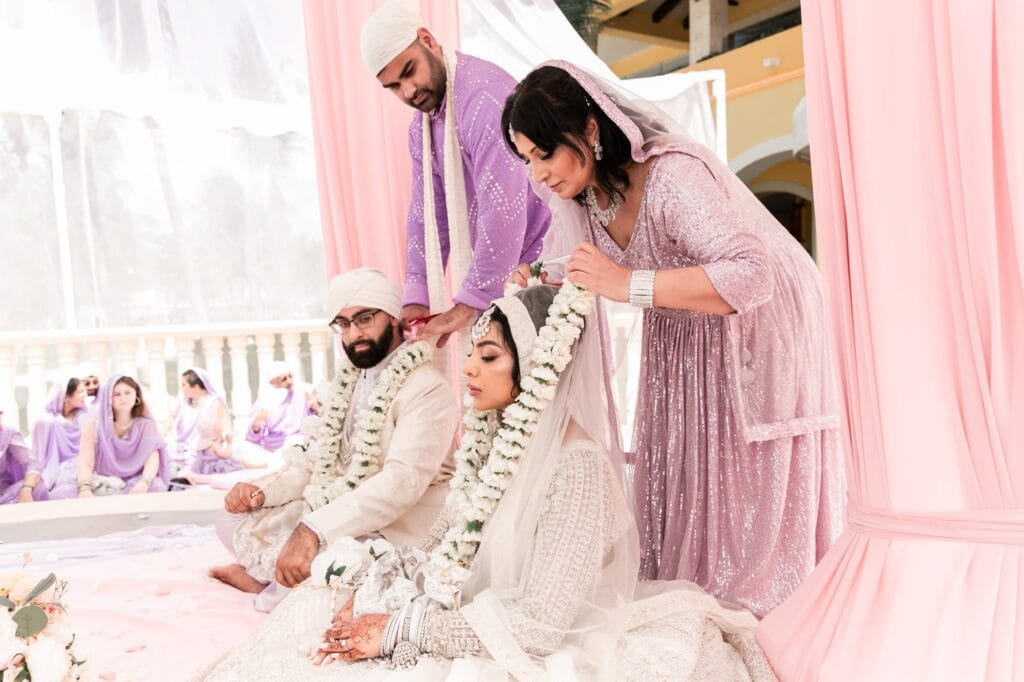
For a religious ceremony, begin with the officiant’s guidance and the family’s actual practices. Discuss permitted movement and positions in advance. The camera plan should fit the ceremony rather than asking the ceremony to perform for the camera.
During preparations, decide whether you want people to continue naturally or welcome a few small changes to the room for portraits. If a family member helps you with clothing or jewelry, that interaction may matter more than a perfectly arranged background. You can still reserve a separate moment for a finished portrait.
For couple portraits, a little structure can remove uncertainty. Walking together, choosing a comfortable place to sit or turning toward each other gives you something to do. Our South Asian wedding posing guide develops that practical side of direction.
At the reception, your preference may shift toward observation. You might love a dramatic portrait before dinner but want the dance floor photographed without interruptions. Give those two requests separate space in the brief.
Build a reference set that explains your preferences
Choose a small number of photographs and write one sentence beneath each. Explain whether you respond to the light, the color, the distance from the couple, the expression or the sense of movement. “We like the quiet connection and the wide setting” is more useful than asking to reproduce an entire image from a different venue.
Include at least one photograph that feels too formal for you and explain why. This is not criticism of the photographer who made it; it gives your own team useful boundaries. Avoid collecting dozens of images that contradict one another without identifying your priorities.
Here is a sample preference brief you can adapt:
During the ceremony and family greetings, we want observation with minimal interruption. For couple portraits, we welcome clear, gentle direction and a few composed images. We want our clothing and the setting to remain recognizable, and we value real expressions over recreating a reference exactly.
Test the style against a complete wedding
A portfolio can show extraordinary individual frames. A complete gallery shows whether the approach also works for transitions, guests, groups and ordinary moments between events. Look for photographs you would want even if they never appeared on Instagram: a parent listening, friends reconnecting, or the room before everyone enters.
Our full-gallery review checklist helps you assess this without relying on marketing labels. Ask how the photographer responds when the portrait window gets shorter. Their answer should help you understand the experience you are choosing, as well as the images.
Make room for both atmosphere and people
Cancun and the Riviera Maya can be part of the visual story without appearing in every frame. A close photograph of a meaningful interaction may say more about the wedding than another broad view. An architectural or coastal portrait can then give the collection a sense of place. The balance is a personal preference, not a rule imposed by the destination.
Questions to ask before choosing a style label
- Which parts of the day should remain completely uninterrupted?
- How much direction do you want during couple and family portraits?
- Do complete galleries keep skin tones and clothing colors consistent indoors and outdoors?
- How does the photographer work when portrait time becomes shorter?
- Are ceremony movement restrictions discussed before the wedding?
Explore our South Asian wedding photographs and note which images feel closest to you. When you contact Xavier Bau Weddings, send your event plans and a few examples of the direction you enjoy. That conversation is a stronger starting point than choosing between two style labels alone.