Family portraits are some of the most meaningful photographs from a South Asian wedding. They are also one of the easiest parts of the day to underestimate. A destination celebration may bring together grandparents, siblings, cousins, family friends, and relatives who have traveled from different cities or countries. Everyone matters, yet the wedding should never feel like a long roll call in front of a camera.
After documenting destination weddings in Cancun and the Riviera Maya, we have learned that the best family-photo experience is built before the wedding day. A clear list, two helpful family contacts, a realistic location, and an intentional order allow us to create important photographs while protecting the energy of the celebration. This guide explains how to build that system for a Hindu, Sikh, Jain, fusion, or multicultural South Asian wedding.
Why South Asian Family Portraits Need Their Own Plan
South Asian weddings often include several events and many layers of family participation. The people surrounding the couple during Haldi may be different from the relatives involved in the ceremony, the reception, or the Anand Karaj. Some elders may need a shorter walking route. Some family members may be helping with rituals and cannot leave the ceremony space immediately. Others may be changing outfits between events.
A generic instruction such as “we want photos with everyone” does not give the photography team enough information. It also places the responsibility on the couple at the exact moment when they should be celebrating. A family portrait plan answers four questions in advance: who must be photographed, when each group is available, where the portraits will happen, and who can help gather people quickly.
The goal is not to photograph every possible combination. The goal is to preserve the relationships that will matter most years from now without taking the couple away from the wedding for an unnecessary amount of time.
Cultural context: For ceremony-specific planning, families can review the Hindu American Foundation wedding primer and the Sikh Coalition overview of Sikh traditions. Confirm portrait timing and access rules with the couple, planner, and officiant because customs vary by family and community.
Build the List by Relationship, Not by a Crowd of Names
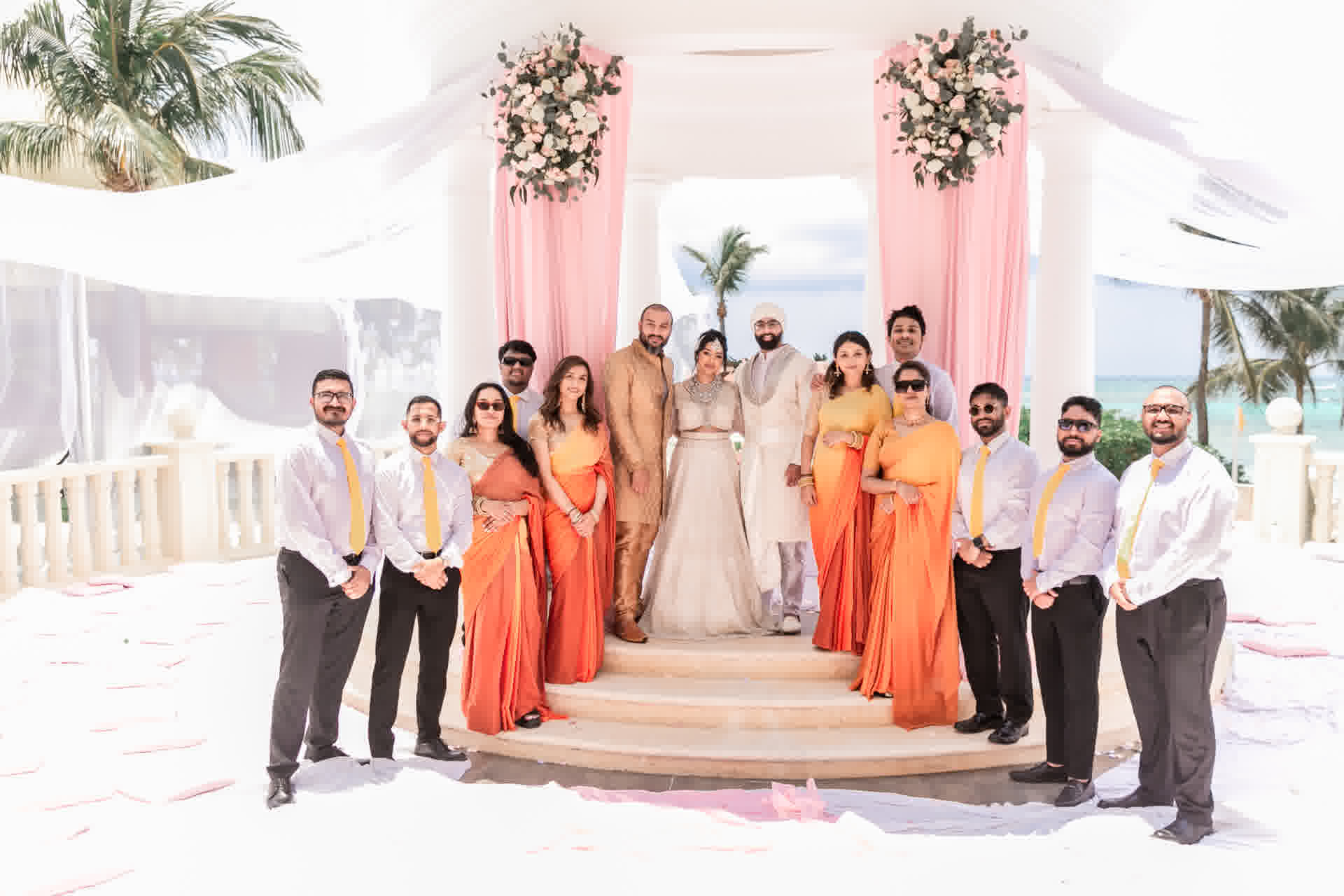
Start with relationships and households. Names are still useful, but the structure should make sense even to someone who has never met the family. A clear list might begin with the couple and both immediate families, then move through each side separately, grandparents, siblings and partners, and a small number of essential extended-family groups.
Begin with the non-negotiable family groups
Write the photographs that would feel truly missing from the final gallery. These usually include parents, siblings, grandparents, and the closest household units. Put them at the top of the list. When time changes unexpectedly, the team can protect these groups first.
Separate ceremony groups from reception groups
Not every portrait has to happen immediately after the ceremony. If cousins are performing during Sangeet, photograph that group while everyone is already together and dressed for the event. If an extended family is only present at the reception, schedule that portrait there. Spreading groups intelligently across the celebration can make the formal portrait period much calmer.
Avoid combinations that differ by only one person
Lists become unmanageable when the same group is repeated over and over with one small change. Ask whether each combination represents a distinct relationship or a photograph someone will genuinely print, frame, or preserve. When the answer is no, combine the group and protect more time for candid interactions.
Choose Two Family Captains Who Know the Guests
The photographer can direct composition, light, posture, and timing, but cannot instantly recognize every aunt, cousin, or family friend. Choose one family captain from each side who knows the people and is comfortable speaking clearly. This should not be the couple, the parents, or anyone responsible for an immediate ritual.
Before the wedding, we can share the final list with the captains. During portraits, one person helps prepare the next group while the other confirms that the current group is complete. This simple system prevents the common pattern of finishing a photograph, stopping the entire process, and then searching through the venue for the next relative.
A good captain is organized and kind. The role is not to shout names or pressure elders. It is to communicate, guide, and help the photography team respect the family’s time.
Select a Location That Works for People, Not Only for the Background
A dramatic beach or garden may look beautiful, but family portraits need more than scenery. The location should be close to the ceremony or reception, easy for elders to reach, wide enough for larger groups, and protected from strong sun, wind, or guest traffic. In a large Cancun resort, a five-minute walk can become much longer when a group is wearing formal clothing, carrying children, or waiting for transportation.
Prioritize shade and short walking routes
Open shade usually gives us more consistent skin tones and a more comfortable experience than direct tropical sun. A terrace, covered corridor, ballroom entrance, garden edge, or architectural lobby can often work better than moving a large family to the beach. We choose the location after considering the light, the number of people, accessibility, and the flow of the event.
Create a real backup location
The backup should be selected before the wedding, not invented after rain begins. It must have enough width and depth for the largest group on the list. A narrow hotel hallway may be covered, but it is not automatically a functional portrait location. The planner, venue, and photography team should know which space is available and how quickly the group can move there.
Place Family Portraits Where They Protect the Celebration
For many ceremonies, the most efficient time is immediately after the formal conclusion, while essential relatives are already nearby. We begin with elders and the largest non-negotiable groups, then release people gradually. This can work especially well when guests are moving into cocktail hour and the couple will remain for portraits.
However, this is not a universal rule. A long Hindu ceremony, a midday outdoor setup, a Gurdwara schedule, transportation between venues, or outfit changes may make another time more appropriate. Some groups can be photographed before the ceremony. Others can be handled during an earlier event. The right decision comes from the complete multi-day timeline, not from copying a template.
Build a buffer around the portrait window. Rituals may run longer, guests may need a few minutes to move, and elders should never be rushed. A buffer protects the couple’s portrait session and reception entrance without turning the family photographs into a stressful race.
Use an Order That Releases People Instead of Making Them Wait
Sequence matters. We normally recommend beginning with the most time-sensitive people: grandparents, elders, young children, and relatives who must leave or change locations. Then photograph the largest complete family group. From there, remove people in an intentional order to create smaller combinations.
For example, a full group can transition into the couple with both immediate families, then one side of the family, parents and siblings, parents only, and grandparents. This is faster than building every group from zero. It also keeps important people close until their final photograph is complete.
Share mobility needs and sensitive family relationships privately before the wedding. Divorced parents, bereavement, estrangement, remarriage, or cultural expectations may affect the order. We do not need personal history; we only need clear direction so the experience remains respectful.
Coordinate Photography and Film Without Repeating the Entire Process
When photo and video teams operate as one coordinated unit, family groups should not be assembled twice. The photographer can create the formal composition while the cinematography team records short moving moments, greetings, blessings, or natural interaction around the same group.
Tell us which family moments have emotional or ceremonial importance beyond a still portrait. A grandparent’s blessing, a sibling’s reaction, or parents adjusting ceremonial clothing may deserve both photography and film. This is different from asking every group to stare at two cameras for several minutes.
Our approach is to preserve a clean formal frame, then invite a brief natural interaction when appropriate. The result is a more complete story with less repetition for the family. Couples exploring multi-day coverage can learn more through our South Asian wedding photography and film guide.
What to Send the Photography Team Before the Wedding
Prepare one final document rather than sending several versions through different messages. Include the group in the exact order you prefer, the names and relationships, the two family captains, mobility considerations, children who may need to go first, and any group that is available only during a particular event.
Keep the final list realistic. A concise, prioritized plan is more valuable than a document with dozens of nearly identical combinations. We can review it alongside the full timeline and suggest which groups belong after the ceremony, during Sangeet, before the reception, or at another moment.
This planning also connects with the broader flow of the wedding day. Our Cancun wedding timeline guide explains how portraits, cocktail hour, and reception timing affect one another. Couples can also contact Xavier Bau Weddings to discuss the family structure and events included in their celebration.
Frequently Asked Questions About South Asian Family Photos
How many family groups should we include?
There is no universal number. Begin with the photographs that would feel genuinely missing, then consider the time, group size, mobility, and number of events. A short list of meaningful groups usually creates a better experience than a long list built from every possible combination.
Should we do all family photos after the ceremony?
Not necessarily. Immediate family and elders may be easiest to photograph then, but groups connected to Haldi, Sangeet, or the reception can often be photographed during those events. We divide the list according to availability and the complete timeline.
Can we photograph a very large extended family?
Yes, when the location, light, and timing are planned for the actual group size. The team needs an accurate estimate in advance so we can choose a space with enough width, create a clear arrangement, and prepare family captains.
What happens if someone important is missing?
The family captains should confirm the essential people before we make the photograph. When someone cannot be found quickly, we protect the rest of the timeline and identify another opportunity later in the celebration rather than holding every guest indefinitely.
Do we need to give the photographer every person’s name?
Names are helpful, especially for family captains, but relationships and group descriptions are essential. “Bride with maternal grandparents” is easier to verify than a list of names without context. The strongest document includes both.