Last reviewed: July 16, 2026.
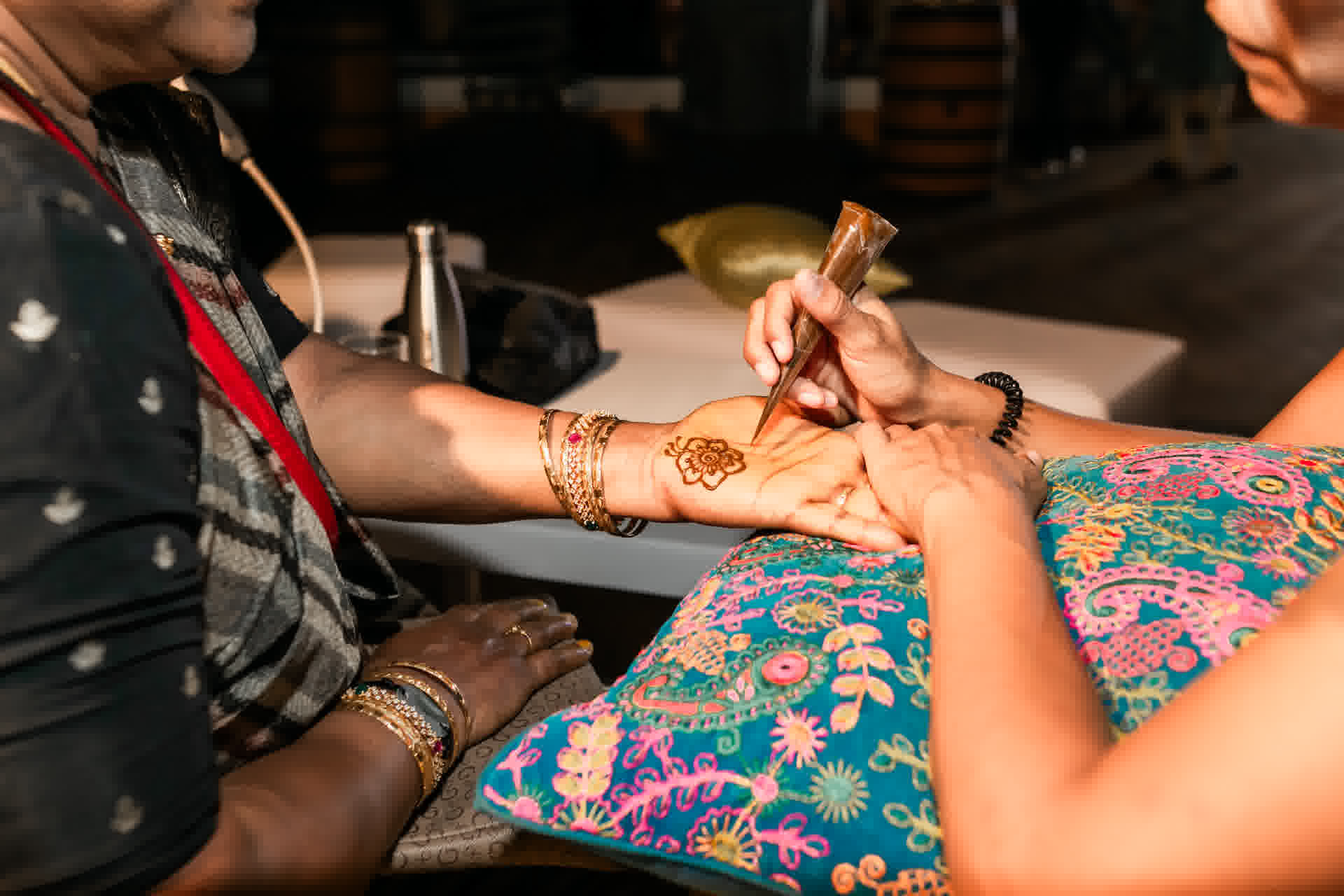
A destination mehndi ceremony can be one of the most intimate and energetic chapters of a wedding week: part art session, part family gathering, and part celebration. In Cancun, it may unfold outdoors or inside. The setting matters, but it should never define the tradition. The family does.
The most memorable mehndi nights are not assembled from a universal checklist. They begin with the couple asking which customs belong to their family, who should participate, and which moments carry meaning. Every choice can then support that version.
What a Mehndi Night Can Mean
Henna comes from the leaves of Lawsonia inermis. According to the Royal Botanic Gardens, Kew, its paste is used to create temporary skin designs in wedding traditions connected with Hindu, Muslim, and Sikh communities, among others. Its form varies across countries, regions, religions, and diasporas.
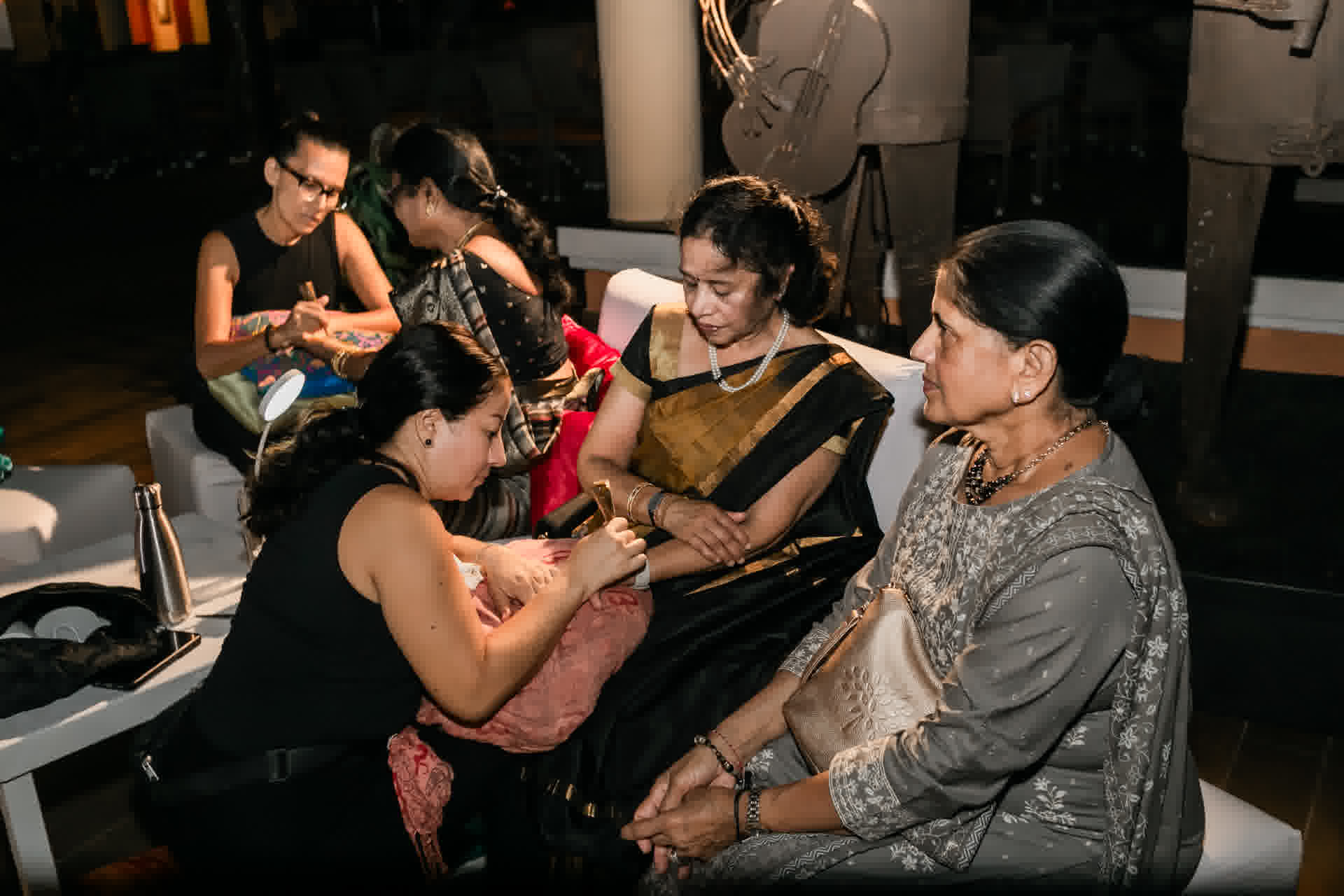
For some families, it is a formal pre-wedding ceremony. For others, it is a relaxed henna party, a night of performances, or a gathering where relatives share songs and stories. It may focus primarily on the bride, include both partners, welcome guests to receive small designs, or remain a private family moment. Use the name and meaning the family uses rather than imposing a generic “South Asian wedding tradition.”
Let the Family Define the Celebration
Before choosing colors or entertainment, identify the event’s cultural authority. That may be the couple, a parent, a grandparent, or another person trusted to explain the family’s customs. Ask what the event is called, whether it is cultural or religious in their practice, who applies or receives henna, which music and languages belong, and whether any moments should remain private.
Distinctions matter. The Hindu American Foundation notes that Hindu wedding customs vary by community, linguistic region, deity tradition, and family. For Sikh couples, the formal marriage ceremony is the Anand Karaj, as explained by the Sikh Coalition; a mehndi event should not be described as a substitute for it. The same care applies when a family combines, or intentionally keeps separate, mehndi, sangeet, haldi, or mayoun.
Choose a Cancun Setting That Works for People and Henna
A beautiful backdrop is useful only if the people applying and receiving henna can sit comfortably. Look for stable seating with arm support, level tables, even lighting, easy restroom access, and enough space for guests to gather without crowding the artist. Keep the station visually connected to the celebration but outside the main path to the dance floor.
For an outdoor event, prioritize full shade, airflow, drinking water, and an indoor or covered alternative that can genuinely hold the celebration. Review the venue’s written terms for outside artists, vendor access, furniture, electricity, amplified music, décor installation, cleanup, and weather relocation. Policies vary, so a general Cancun guide should never be treated as a resort rule. For a wider comparison of event settings, see Cancun hotels versus private villas.
Build the Timeline Around the Henna Artist
There is no responsible universal formula for the number of artists or minutes per guest. A small motif and elaborate bridal coverage are entirely different services. Ask the selected artist to estimate capacity based on design complexity, number of participants, setup, breaks, and the time their paste needs to remain undisturbed.
One flexible approach is to give detailed bridal application a calm window before the busiest part of the party, then open guest stations as arrivals, performances, or dinner begin. Build buffers for portraits, outfit changes, food, and dancing rather than placing every activity back-to-back. Coordinate this plan with the full Cancun wedding photography timeline so the mehndi feels like part of the wedding story, not an isolated appointment.
Make Henna Safety Part of Hospitality
Natural henna generally creates an orange-brown to reddish-brown stain. The U.S. Food and Drug Administration warns that products marketed as “black henna” may contain PPD, an ingredient associated with dangerous skin reactions. The FDA has also received reports of injuries from products sold as henna, and its regulatory guidance states that henna is not approved for direct skin application in the United States.
For a wedding in Mexico, use that information as safety guidance, not as a claim about Mexican law. Ask the artist to disclose ingredients, avoid unknown mixtures or promises of an instant black stain, and keep participation optional. Guests with allergy concerns or skin conditions should make their own informed health decisions. “Natural” and “organic” should not be presented as guarantees.
Plan for Cancun’s Tropical Conditions
The CDC recommends shade, non-alcoholic fluids, rest, and scheduling outdoor activity during cooler parts of the day in hot climates. Its travel guidance on sun exposure also notes that sand and water can increase reflected ultraviolet exposure. Offer broad guest protection while asking the henna artist how sunscreen or insect repellent should be timed around application areas; do not solve one concern by ignoring another.
The Atlantic hurricane season officially runs from June 1 through November 30, according to the National Hurricane Center. That does not predict weather for a particular wedding date. It does make a documented rain-and-wind plan sensible. Monitor official forecasts close to the event, confirm who has authority to move the celebration, and keep guests informed. A broader Cancun wedding Plan B can help couples think beyond a single outdoor image.
Photograph the Art and the Relationships Around It
Finished designs deserve careful detail photographs, but the full story is larger: an artist beginning the first line, a relative watching closely, friends rehearsing a performance, hands held still while conversation continues, and the release when the dance floor opens. Place the henna station where light is consistent and the photographer can work without obstructing the artist.
Share the order of events, key relatives, meaningful objects, performance schedule, and any no-photo moments in advance. Photograph hands and attire before application, the process without forcing poses, finished work when the artist says it is ready, and the candid energy around it. For additional context on planning visual coverage, see Indian wedding photography in Cancun, then confirm that every photographed moment reflects the family’s own priorities and permissions.
A Flexible Mehndi Night Flow
- Welcome: refreshments, family greetings, and context for guests who may be unfamiliar with the event.
- Focused application: protected time for detailed work and immediate-family photographs.
- Guest experience: optional henna stations, food, conversation, music, and performances paced around artist capacity.
- Celebration: entrances, toasts, dances, or family traditions chosen by the couple.
- Closing: final design photographs, artist guidance, and a clear transition to the next wedding event.
This is a planning framework, not a ritual sequence. Remove, reorder, or rename every part to match the family.
Frequently Asked Questions
Is a mehndi ceremony religious?
It can have cultural or ritual importance within Hindu, Muslim, Sikh, and other families, but its meaning is not universal. Ask the couple how their family understands it and distinguish it from the formal marriage ceremony.
When should we schedule a destination mehndi night?
Schedule it around the family’s wedding sequence and the artist’s process. Avoid prescribing a fixed day or duration without those details.
Can wedding guests receive henna?
Yes, if the couple wants an open station and the artist has capacity. Participation should remain optional, with ingredients disclosed.
Is black henna safe?
The FDA warns that black henna may contain PPD and can cause dangerous skin reactions. Avoid unknown products and ask the artist for a complete ingredient list.
Can a mehndi night be outdoors in Cancun?
It can, when the venue permits it and the plan includes shade, guest comfort, secure décor, and a workable covered or indoor alternative.
Can we combine mehndi and sangeet?
Only if that reflects the family’s preferences. They should not be treated as interchangeable simply to simplify a schedule.
Create a Celebration That Belongs to You
Cancun can provide atmosphere, but meaning comes from the people in the room. Start with the family’s language and customs, choose professionals who listen before prescribing, and build enough flexibility for artistry, comfort, and genuine connection. That is how a destination mehndi becomes more than a beautiful event: it becomes an honest chapter of the family’s wedding story.
Use this checklist with your family, planner, venue, and henna artist before confirming the event flow.