If your wedding includes two ceremonies, the photography plan needs to understand both. Each may involve different leaders, family participants, spaces, clothing, words and camera boundaries. Giving them the same short label in a schedule leaves too much to assumption.
For a fusion or multicultural destination wedding in Cancun or Riviera Maya, create a separate brief for each ceremony, then connect them through one shared plan. The aim is to preserve what each means to you while making the practical transition between them clear.
Use the names your families use
Ask each partner how they want the ceremonies described. “Fusion wedding” can be useful shorthand, but it does not tell a creative team which traditions are present or how your families understand them. A Hindu ceremony, a Sikh ceremony, a personal vow exchange and other ceremonies should not be treated as interchangeable formats.
Share the confirmed ceremony names and the people who can explain the planned sequence. Do not expect a photographer to infer your family’s choices from an ethnic label or from another couple’s wedding.
Create one brief for each ceremony
Keep the structure consistent so the team can compare the practical information while preserving the differences:
- People: Who leads the ceremony, who participates, and which relatives’ reactions matter particularly to you?
- Sequence: What is planned to happen, and who is responsible for confirming that information?
- Space: Where are the participants, guests and creative team expected to be?
- Boundaries: What recording, movement or access instructions must the team follow?
- Words: Which voices, readings or personal promises are important to record, and in which languages?
- Portraits: Which family photographs or attire details should be made before anyone changes clothing or leaves?
Have each brief reviewed by the people responsible for that ceremony. The wedding planner can coordinate the shared schedule, but questions about ceremony practice should reach the relevant leader rather than be decided through a photography checklist.
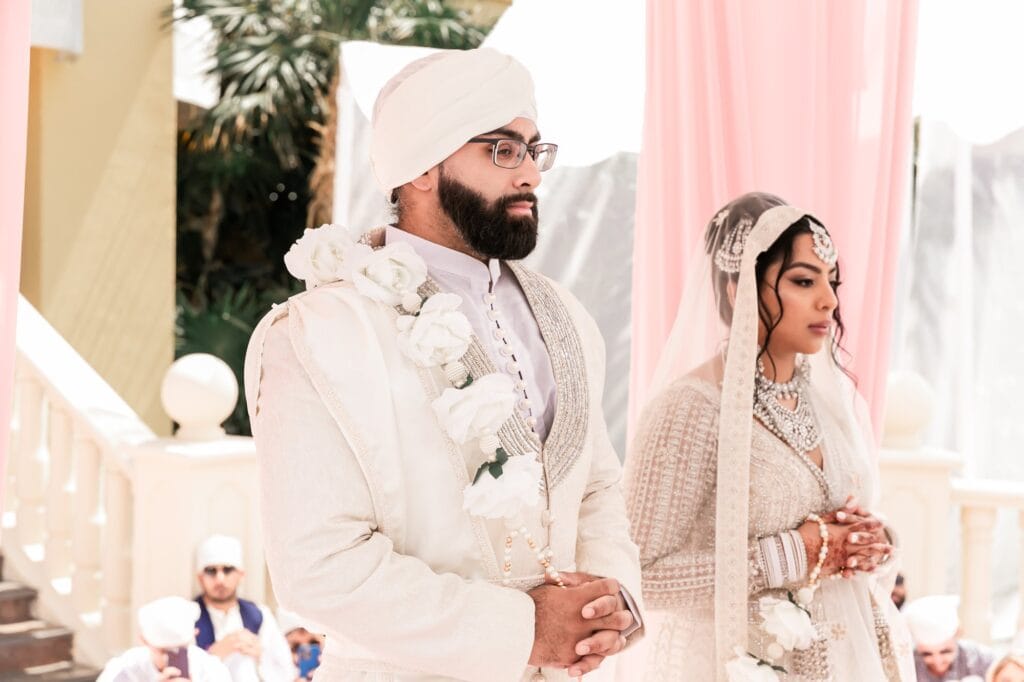
Describe what balanced coverage means to you
Equal respect does not necessarily mean identical numbers of photographs or equal minutes in a highlight film. One ceremony may be longer, involve more participants, or have different recording boundaries. Explain what you would consider a meaningful representation of each.
A hypothetical couple might identify a grandparent’s participation in one ceremony and their personal vows in the other as essential. Another might want complete film coverage of both, with a short highlights edit that brings them together. Those wishes affect coverage and deliverables, so discuss them before the wedding.
The guide to a connected multi-event photography and film story can help you think about recurring people and details without forcing different ceremonies into one visual formula.
Protect the transition between ceremonies
List the actual work that happens between them: clothing changes, transport, room preparation, family photographs, time to eat or pause, and equipment movement. Confirm who remains in each location and where the couple should go next.
Do not assume that a gap on the printed schedule is free portrait time. One partner may need most of it for dressing while a ceremony space is being prepared elsewhere. If both locations need simultaneous coverage, ask the team how responsibilities will be divided.
Also name the decision-maker for a delay. The creative team needs a clear update if the second ceremony’s start time or room changes; it should not receive contradictory messages from several relatives.
Keep family photographs specific to each moment
Some relatives may attend both ceremonies; others may participate in only one. Some combinations may matter in a particular outfit or setting. Mark those distinctions in the family photograph list so an important group is not deferred until someone has changed or departed.
At the same time, avoid repeating every group by default. Decide which combinations need both settings and which can be made once. This protects time while keeping the choices grounded in family meaning.
Coordinate sound and filming separately for each ceremony
Even at one venue, the people speaking and the audio arrangements may change between ceremonies. Share contacts, expected speakers and language information for each event. Use the wedding video audio checklist to prepare those conversations.
If any personal words are intended for private viewing, record that preference alongside the request to capture them. If complete recordings matter, clarify the planned film deliverables instead of assuming both ceremonies will appear in full within one short edit.
Finish with one confirmed shared plan
Give the photographer and filmmaker the latest ceremony briefs together with the current schedule and one contact for updates. Your preparation should help the team anticipate the day while allowing you to remain present in it.
View our South Asian wedding photography and cinema in Cancun and Riviera Maya, then tell Xavier Bau Weddings about the ceremonies you are planning. Begin with what each means to you and the people who will help shape it.