Music can announce an arrival, support a ritual, connect generations, frame a performance, and transform a reception. Selecting a South Asian wedding DJ in Cancun calls for careful review of musical range, room awareness, complex cues, and destination operations.
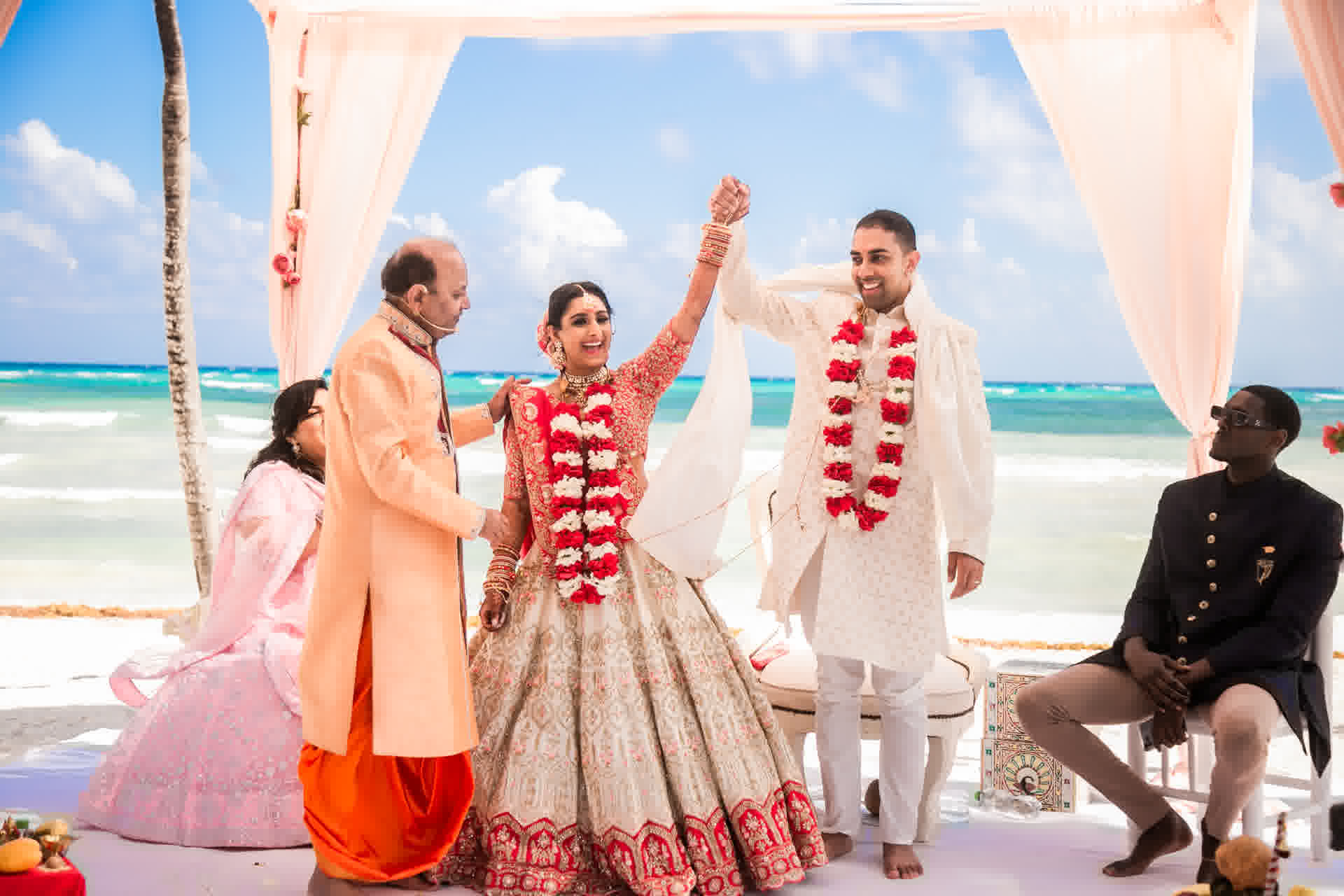
No genre, song, or event sequence represents every South Asian family. Confirm ceremonial music and meaningful selections with your families and officiant. Then give the DJ, planner, and production team one clear brief that separates must-play moments from flexible creative direction.
Xavier Bau Weddings does not provide DJ or entertainment services. This guide helps couples evaluate and coordinate an independent DJ with their planner, venue, and production team.

Choose a DJ for Tradition-specific Range and Operational Skill
A strong candidate should be able to discuss musical transitions, event flow, pronunciation, family preferences, and technical needs in practical terms. Experience with multi-day celebrations is valuable because the tone can shift significantly from one gathering to another.
Ask scenario-based questions
Instead of asking only whether the DJ knows a genre, ask how they would move from family performances into open dancing, handle a delayed entrance, balance requests from different generations, or adapt when the planned energy changes. Their answers reveal judgment and communication style.
Review complete event examples
Short highlight clips show exciting moments but not the quality of an entire evening. Ask how the DJ structures a set, coordinates with the emcee, and keeps energy during dinner, speeches, and transitions. Confirm who will actually perform at your wedding and who will manage production on site.
See our South Asian weddings in Cancun page for examples of editorial portraiture and documentary storytelling across multi-day events.
Create a Music Brief for Every Event
Treat each gathering as its own chapter. A welcome evening, haldi, sangeet, baraat, ceremony, cocktail hour, and reception may need different equipment, volume, energy, and levels of direction.
Define the purpose and mood
For each event, write three words describing the desired feeling. Then list key moments, required songs, songs to avoid, language preferences, and how much guest-request flexibility you want. A concise brief gives the DJ creative room within clear boundaries.
Separate ceremonial and social music
Music connected to a ritual may need specific versions, durations, or cues. Confirm those details with the people responsible for the ceremony. Social events can allow more improvisation, but entrances, dances, and performances still need approved tracks and named cue points.
Coordinate Baraat Sound and Movement
A baraat combines music, people, movement, timing, and a route. Its success depends on coordination among the planner, entertainment team, venue, transportation providers when relevant, family leads, and photo and video teams.
Plan the route and timing
Confirm the staging point, route, estimated duration, gathering time, final transition, and weather alternative. Venue procedures and access requirements vary, so verify current details directly rather than relying on a past wedding.
Identify the essential cues
Share who leads, who should be nearby, any family moments to anticipate, and how the procession will end. The DJ or live musicians should know the exact handoff into the next event. Photography and film teams need access to move safely without interrupting the experience.
Make Sangeet Performances Easy to Follow
A sangeet run of show can involve many performers, track files, introductions, costume changes, and surprises. Organize these elements early so the evening retains momentum.
Build one performance sheet
For every performance, record the performers, introduction, track name, file version, approximate duration, starting position, and any lighting request. Number the final audio files in event order and keep a backup copy available to the responsible production lead.
Rehearse transitions, not only choreography
The spaces between performances can create more delays than the dances themselves. Confirm how performers enter and exit, who speaks between acts, where the next group waits, and how open dancing begins. Give the planner authority to keep the approved sequence moving.
A clear run of show also helps visual teams anticipate reactions and performances. Review the Cancun wedding timeline guide for more ways to protect meaningful moments without making the schedule feel rigid.
Design Ceremony Audio for Clarity and Respect
Ceremony audio should help guests hear without dominating the setting. Discuss microphones, speaker placement, music cues, officiant needs, translations if any, and backup equipment with the production team. Outdoor wind and distance can affect intelligibility, so a professional sound plan matters.
Prepare a cue sheet
List processional groups, music selections, stopping points, ritual transitions, recessional cues, and the person authorized to call each change. Confirm names and pronunciation. If a musical choice has ceremonial significance, ask the family or officiant to verify it.
Protect the visual environment
Technical equipment needs to work reliably, but thoughtful placement can keep stands, cables, and speakers from competing with the ceremony design or blocking guest sightlines. The planner, production team, designer, and venue should solve this together.
Shape Reception Energy Without Overprogramming
The reception needs a rhythm, not a minute-by-minute soundtrack chosen months in advance. Identify the formal cues and let the DJ respond to the room between them. Avoid stacking entrances, dances, speeches, dinner, performances, and cake so closely that guests never settle into the celebration.
Share a do-not-play list and explain why certain requests should not be accepted. Designate one person for real-time music questions so the DJ is not receiving conflicting instructions. Xavier Bau Weddings is a Cancun-based bilingual photo and video team with more than 15 years of destination-wedding experience and more than 1,200 weddings documented. Planner timeline coordination, calm direction, editorial portraiture, and documentary storytelling help us preserve both the planned energy and the spontaneous moments around it. For the complete visual-coverage approach, see our Indian wedding photographer in Cancun guide.
Frequently Asked Questions
Should our DJ also serve as the emcee?
They can, but confirm that their speaking style, pronunciation, and level of presence fit your families. Some celebrations benefit from a separate emcee who knows the people personally.
How many songs should be on the must-play list?
Include the songs tied to formal moments and a focused group that defines your taste. Leaving room beyond that list allows the DJ to respond to guests and event flow.
Do we need different sound systems for each event?
Possibly. The answer depends on locations, transitions, venue infrastructure, and production design. Ask the entertainment and production teams to specify the setup for every event.
How should we send performance music?
Follow the DJ’s requested file format and deadline, label every final version clearly, and keep one organized backup. Avoid sending multiple competing versions close to the event.
What is the best way to handle guest requests?
Decide your preference in advance. You can allow requests within the music brief, restrict them to designated people, or ask the DJ to use judgment while protecting the do-not-play list.
A well-designed music plan makes each event feel distinct while connecting the celebration as a whole. Clear cues and trusted creative partners leave you free to experience the energy rather than manage it. To plan photography and film around your Cancun wedding’s real rhythm, contact Xavier Bau Weddings.