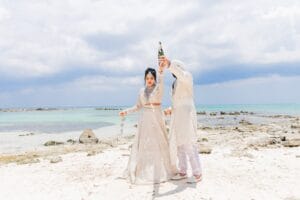
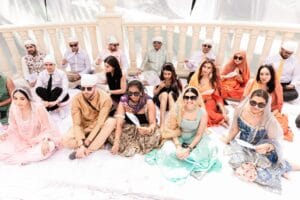
Destination decor in Cancun already has a strong visual foundation: sea, sky, tropical light, and architecture. The design can build on that setting while reflecting the people, traditions, and atmosphere each event is meant to hold.
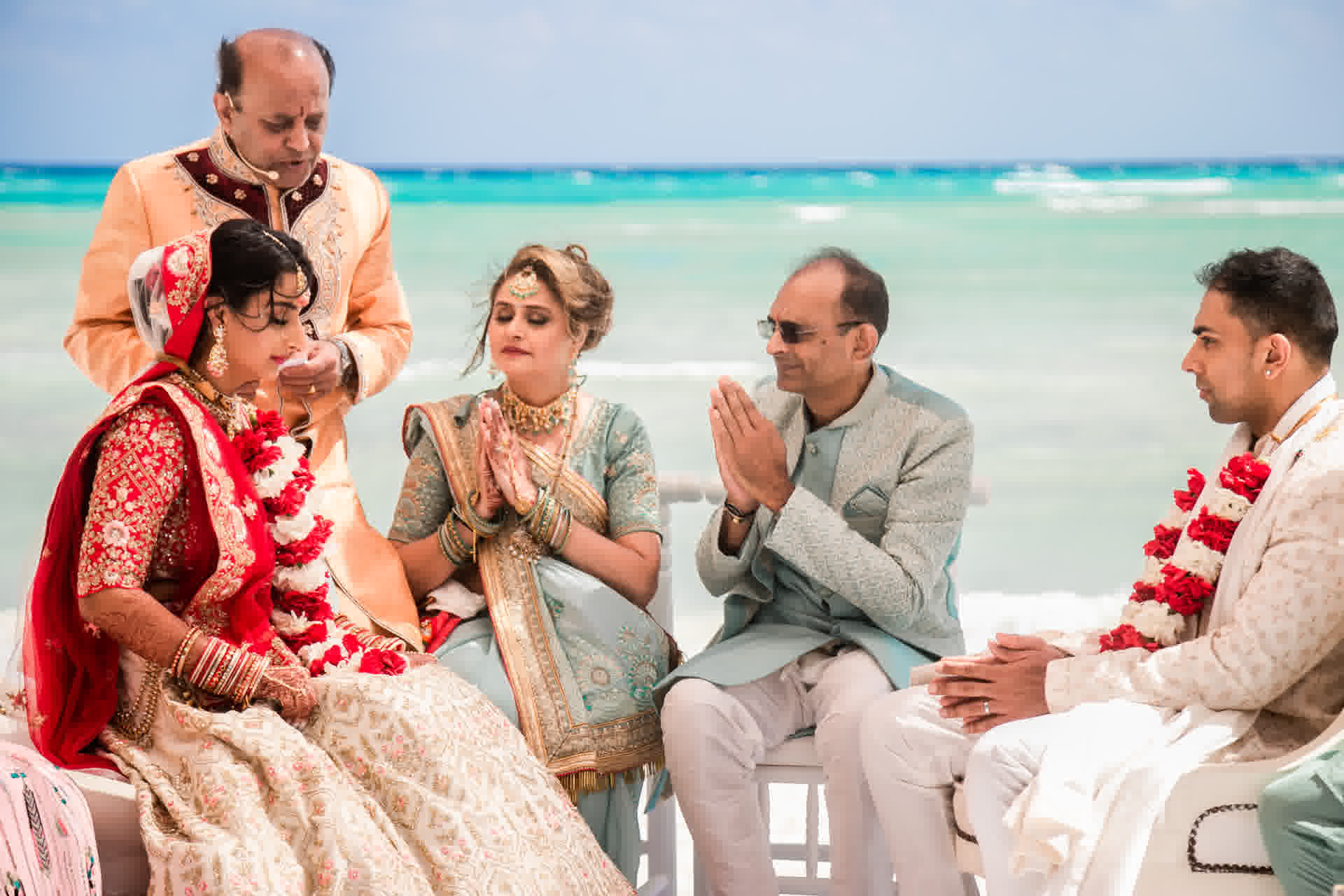
There is no single South Asian wedding aesthetic, and no color or symbol belongs automatically in every celebration. Families and communities observe traditions differently. Confirm the meaning and appropriate use of ceremonial elements with your families, officiant, and planner, then let the creative direction express your particular story.
Build One Visual Story Across Multiple Events
A multi-day celebration can move through several moods without looking disconnected. Start with three or four design principles, such as luminous color, refined texture, botanical abundance, or modern geometry. These principles become a filter for every event.
Choose a visual anchor
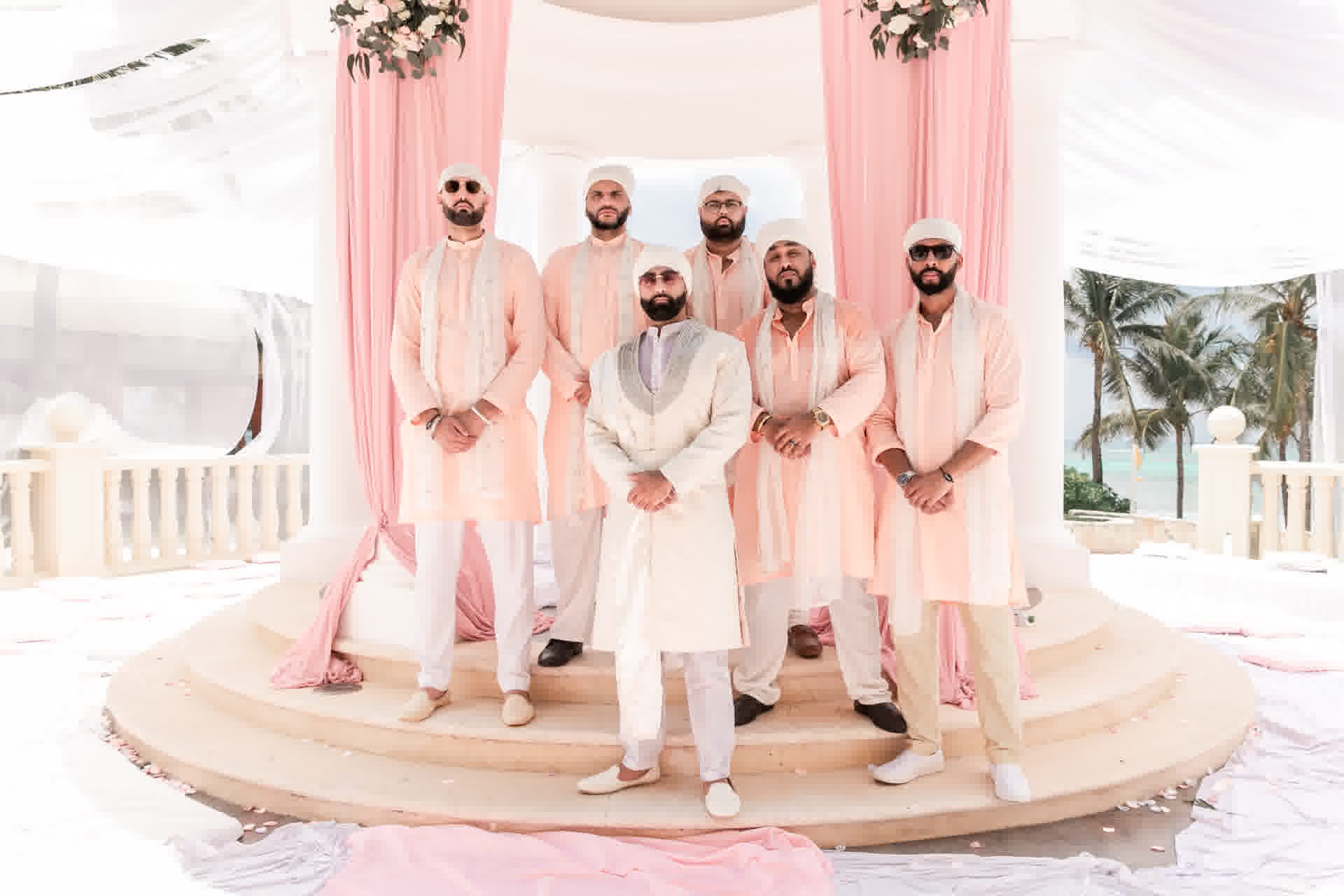
Your anchor might be a color family, a textile pattern, a flower, an architectural form, or a story connected to your families. Repeat it selectively through stationery, signage, ceremony details, table design, and wardrobe accents. Repetition creates continuity, but variation keeps the experience from feeling copied from one day to the next.
Give each event its own expression
A welcome gathering might feel relaxed and coastal. A haldi can be bright and intimate. A sangeet may embrace theatrical lighting and movement. The ceremony can become quieter and more symbolic, while the reception moves toward evening sophistication. See our South Asian weddings in Cancun page for examples of editorial portraiture and documentary storytelling across distinct events.
Use Color With Intention
Destination weddings can support saturated color beautifully, but color should respond to light, setting, wardrobe, and event timing. A palette that feels rich in a ballroom may behave differently under direct tropical sun.
Plan palettes by time of day
Morning and midday settings often benefit from colors that remain clear in bright light, balanced by texture and shade. Evening events can carry deeper tones, reflective surfaces, and layered lighting. Ask the designer to show how materials look in conditions similar to the event, not only in a studio sample.
Coordinate without matching everything
Couple attire, family wardrobes, florals, backdrops, and linens do not need to share an exact color. A coordinated range gives the imagery depth and prevents the people from disappearing into the background. Share key wardrobe information with the planner, designer, and photo and video team before final selections.
Design Ceremony Spaces Around Meaning
The ceremony structure is often the visual center of the day, but its success depends on more than appearance. It must support the rituals, people, movement, sightlines, sound, and weather plan.
Let the setting contribute
A mandap or ceremony installation can frame the ocean, a garden, or a strong architectural feature instead of covering it. Consider asymmetrical florals, layered textiles, sculptural forms, or a restrained palette that allows the location to remain visible. The appropriate form and ceremonial details should be confirmed with your family and officiant.
Protect guest comfort and camera sightlines
Discuss sun direction, shade, wind, aisle width, seating angles, and the location of sound equipment with the planner. Keep important ritual areas visible from multiple positions. Practical choices can be elegant, and they help guests remain present while photography and film document the ceremony respectfully.
Create Decor That Moves Well Through the Day
Some design elements can be repurposed, but repurposing only works when transport, timing, labor, and installation are planned. A floral arrangement that moves from ceremony to reception may need a clear route and a team ready during the transition.
Invest in high-impact zones
Rather than decorating every surface, identify the places where guests gather and where photographs naturally occur. These may include the ceremony backdrop, entrance, dance floor, couple’s table, lounge, or portrait area. Focus can make the celebration feel more considered than a large volume of unrelated details.
Use signage as part of the design system
Welcome signs, event schedules, seating guidance, and menu information can carry the same typography, materials, and motifs. Clear signage also helps guests navigate a destination event. Keep instructions easy to read and avoid allowing decorative type to compete with essential information.
For ideas about how planning choices affect the finished visual record, explore the ultimate wedding photography guide.
Plan Lighting for Atmosphere and Photography
Lighting is part of the decor, especially after sunset. It shapes skin tones, texture, depth, and the energy of the room. Ask the production and design teams to coordinate ambient lighting, stage lighting, pin spots, and dance-floor effects instead of treating them as separate systems.
Warm, layered light can feel intimate, while dynamic color can support performances and dancing. Avoid relying on a single lighting look for every part of the evening. A reception needs different visual conditions for entrances, dinner, speeches, performances, and open dancing. The photo and video team can share practical input while the planner and production leads retain control of execution.
Prepare for Cancun Conditions
Outdoor decor needs a credible alternative for wind, rain, and changes in ground conditions. Materials, open flame, suspended installations, electrical elements, and structures should be reviewed by the responsible professionals and approved through the venue’s current process.
Do not wait for the forecast to begin discussing the alternative. Design the covered or indoor version with the same care so it feels intentional if used. For broader destination planning context, see the Cancun venue comparison guide.
Frequently Asked Questions
Do we need a different color palette for every event?
No. You can use one broad visual system and shift the emphasis, tone, or texture for each gathering. This creates variety without losing continuity.
Should decor match our wedding attire?
It should relate to the wardrobe, but exact matching is not necessary. Coordinated contrast often creates stronger visual depth. Share final attire colors with the design and photography teams.
Can ceremony decor be reused at the reception?
Sometimes. Ask the planner and designer to confirm whether the pieces can be moved safely within the available transition time and whether the result will look intentional in the second space.
How do we make a ballroom feel personal?
Use a clear focal point, layered lighting, meaningful materials, considered table design, and a few repeated details tied to your story. Personalization does not require filling every surface.
What should we decide before hiring a decor team?
Clarify your event list, priorities, approximate guest experience, venue context, and overall visual direction. The design team can then translate those goals into a practical proposal.
Beautiful decor shapes more than the surroundings of a wedding. It helps guests understand the mood, gives rituals an intentional setting, and supports the visual memory of the celebration. Xavier Bau Weddings brings more than 15 years of destination-wedding experience and more than 1,200 weddings documented to the way we plan around light, ceremony spaces and design. Couples comparing full coverage can explore our Indian wedding photographer in Cancun guide, or contact Xavier Bau Weddings.