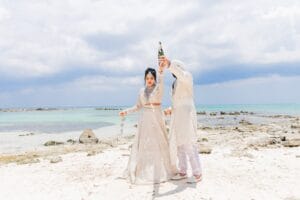
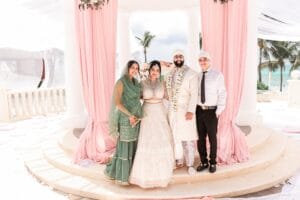
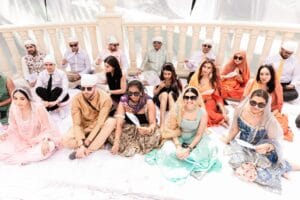
Sargassum wedding alternatives in Cancun work best when they are designed as real wedding experiences, not treated as emergency substitutes. Shoreline conditions can vary, so the goal is not to predict one perfect outcome. It is to create a visual plan that remains coherent whether portraits happen by the water, on a terrace, through architecture, or indoors.
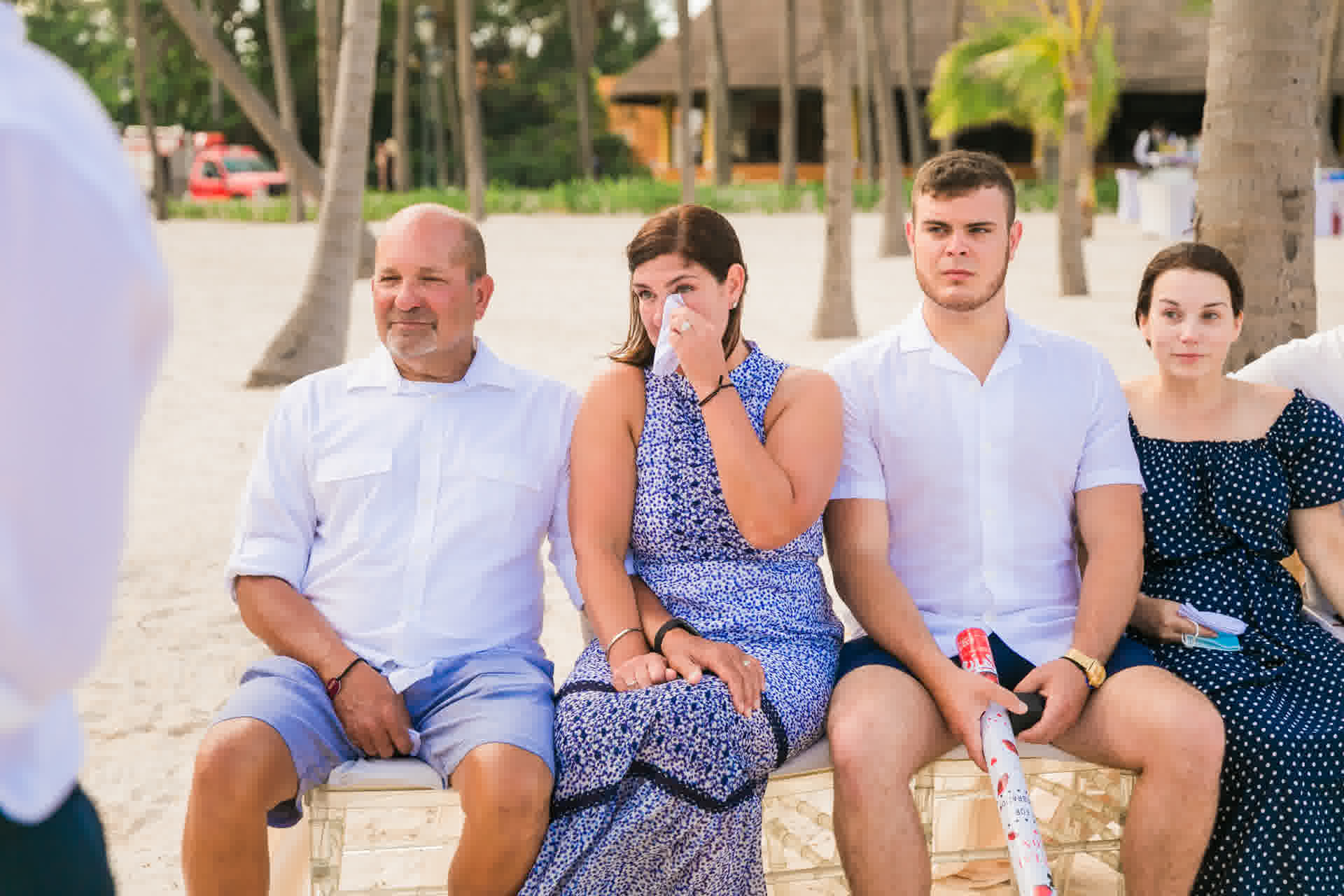
Our existing Cancun sargassum calendar and Plan B guide explains the broader planning problem. This article takes a narrower angle: how to build a photo-first alternate route with enough light, depth, privacy, and continuity to support a complete story.
Plan Three Visual Scenes Before You Need Them
A useful alternate plan should cover the ceremony, couple portraits, and guest experience. These scenes do not need to share one room. They need a compatible visual direction and a realistic flow between them.
A covered ceremony scene
Evaluate terraces, courtyards, arcades, and indoor spaces that the venue makes available for your event. Look beyond the label “backup space.” Consider sight lines, the couple’s position, guest seating, background distractions, and how natural or installed light enters the scene. Confirm availability, capacity, setup rules, and current access directly with the planner or venue.
An architectural portrait scene
A clean corridor, staircase, lobby edge, textured wall, or shaded transition space can create editorial portraits without pretending to be a beach. Choose one or two areas that provide depth and enough room for calm direction. The strongest alternate portraits often embrace the architecture rather than trying to hide the change of plan.
An intentional indoor reception scene
Ask how the reception design will translate if more of the event moves under cover. Lighting, table placement, entrances, speeches, and dancing all affect the photographic story. The planner and design team should lead those decisions. Photography and video can then identify positions that preserve guest reactions and the atmosphere of the room.
Select Spaces for Light and Flow, Not Their Names
“Indoor,” “covered,” and “terrace” do not describe how a space will photograph. Visit or review each option for the time it may be used. Notice window direction, ceiling and wall colors, practical light sources, reflections, guest routes, and visual clutter. Ask what elements can be adjusted and what must remain.
Compare your options with the broader considerations in our Cancun hotels and private villas guide. The goal is not to declare one venue type safer. It is to understand the specific primary and alternate spaces included in the event you are actually planning.
Build the alternate route in the same order guests and the couple will experience it. If it requires long transfers, repeated elevator trips, or crossing an active setup area, the plan may need simplification. A visually modest space with easy flow can support a stronger story than a dramatic room that disrupts the schedule.
Create One Decision Path With Clear Ownership
A Plan B becomes stressful when nobody knows who decides or how the decision reaches every team. Before the event, identify the person responsible for the location decision, the information they will review, and the communication path to the couple, venue, planner, and creative teams. Photography should not make the operational decision, but it can explain the visual consequences of each option.
Document the primary route and alternate route in the same timeline. Include where preparation happens, where the ceremony party gathers, where family portraits move, and how guests reach the next space. Avoid relying on verbal memory. A shared plan lets each team adapt its own work without repeatedly asking the couple.
Translate the Design Instead of Shrinking It
An alternate ceremony should not feel like the beach plan squeezed into a smaller room. Ask the planner and design team how the focal point, aisle, seating, florals, and lighting can respond to the alternate architecture. A deliberate translation can make the covered version feel complete on its own.
From a photography perspective, prioritize a clean focal area, open sight lines, room for the processional, and access to genuine reactions. Avoid adding visual elements only to fill space. The people, ceremony, and relationships remain the center of the story.
Seasonal context can help you ask better questions, but it cannot promise a specific shoreline. Review the best months for a Cancun wedding as one planning input, then keep the alternate route ready regardless of date.
Coordinate the Photo and Video Response
Photography and video may need different positions in a covered space, especially when guest sight lines and audio matter. Agree on camera zones, ceremony movement, and portrait transitions before the space is active. This protects the experience and reduces the chance that the couple is asked to repeat moments.
Xavier Bau Weddings is a Cancun-based bilingual photo and video team with more than 1,200 weddings documented. We combine editorial portraiture with documentary storytelling, provide calm direction, and coordinate timing with the planner. When an alternate route is activated, that shared approach helps the visual story remain consistent without claiming that the day is unchanged.
Review full wedding stories with an eye for visual transitions. Notice how architecture, interiors, portraits, ceremony context, and reception energy can create variety even when the beach is not the only setting.
Use a Photo-First Plan B Checklist
- Confirm the exact primary and alternate spaces with the venue.
- Review each option at the likely time of use.
- Create a compact route for the couple, family, and wedding party.
- Give the ceremony a clean focal point and open sight lines.
- Choose one architectural portrait zone and one nearby alternate.
- Place both routes in the planner’s working timeline.
- Define who makes the location decision and how it is communicated.
- Align photography and video positions before guests enter.
The result is not a promise of identical photographs in every condition. It is a prepared visual system that gives the people and emotions of the wedding a strong setting.
Frequently Asked Questions About Sargassum Wedding Alternatives
Should we abandon beach portraits if sargassum is present?
Not automatically. The planner and creative team can evaluate the current shoreline, available viewpoints, timing, and alternate spaces before choosing a route.
What makes an indoor location photograph well?
Useful light, visual depth, controlled clutter, enough working space, and a clear connection to the timeline matter more than the room’s label.
Who should decide whether the alternate plan is activated?
Define that authority with the planner and venue before the event. Photography and video can advise on visual effects, but operational ownership should be clear.
Can a covered ceremony still feel intentional?
Yes, when the layout and design respond to the alternate architecture instead of copying the outdoor plan without adjustment.
Do we need a separate portrait plan from the ceremony Plan B?
Yes. The ceremony space may not provide the privacy, light, or visual variety needed for couple and family portraits, so identify those zones separately.
Want to align an alternate route with your photography and film priorities? Contact Xavier Bau Weddings and share your venue, date, and current Plan B.