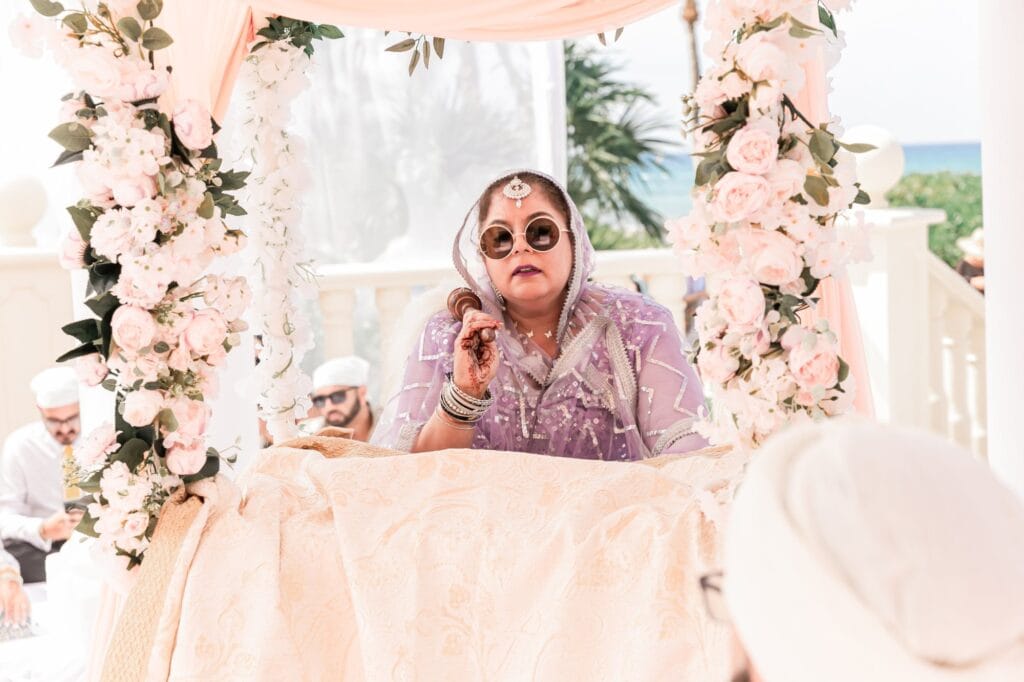
At a multilingual wedding, a speech can move between languages in a single sentence. A grandparent may use a family expression that needs context. A sibling may tell a joke whose meaning disappears in a literal translation. Subtitles can help relatives understand the film while keeping those voices recognizable.
For an Indian destination wedding in Cancun, begin by identifying the languages your own family will use and who will watch the films. Do not assume that everyone shares the same first language or that a ceremony’s language matches the language spoken at the reception.
Define the text you want viewers to see
There are two related needs to discuss. Translated subtitles help viewers understand a language they do not speak. Captions can also identify speakers and meaningful sounds for viewers who cannot hear the audio. Text may be permanently visible in the image or available as a track the viewer can turn on in a compatible player. The W3C guide to captions and subtitles explains these distinctions and why automatic text needs accuracy review.
Tell the filmmaker which versions matter to your family. You might want English translation for selected parts of a highlight film, another language for a private family version, or captions across a complete speech. Confirm availability and scope; these are requests to discuss, not features to assume are included.
Prepare a small family glossary
A glossary helps a translator or editor resolve words that may be unfamiliar or ambiguous. It does not need to become a script for the speeches. Include only information that makes a practical difference:
- The spelling of the couple’s names and the names of expected speakers.
- Family names, nicknames and preferred forms of address likely to appear.
- The languages expected in each event or speech.
- Terms you would prefer to retain in the original language, with a brief explanation.
- A contact who can clarify an uncertain phrase or identify a speaker.
Do not flatten a meaningful family title into a generic label simply to make the text shorter. Discuss whether to retain the original word, introduce it with a short explanation, or use an agreed translation. Consistency across the film matters more than treating every expression the same way.
Choose one person to consolidate language feedback
A fluent family member can explain personal references, but being close to the family does not automatically mean they can translate every language or ceremonial passage. For unfamiliar material, ask who is qualified to review it. Religious language should be checked by an appropriate knowledgeable person rather than guessed from a casual paraphrase.
Choose one contact to collect corrections from the relevant reviewers. This avoids separate messages with conflicting spellings or wording. The couple should also decide who can view private speeches or letters during translation and review.
Protect the source recording as well. Our destination wedding audio checklist covers planning for clear voices; subtitles cannot reliably recover words that were never recorded clearly.
Review meaning first, then timing and presentation
Use two passes. First, review whether the words mean what the speaker intended. Check names, changes between languages, negatives, jokes and references to other people. If a phrase is unclear, mark it for clarification instead of quietly replacing it with a plausible sentence.
Second, watch the text within the film. Does it appear while the relevant person is speaking? Is there enough time to read it? Does it cover a face, hand gesture or other meaningful detail? Check the intended viewing size, particularly if the film will often be watched on a phone.
Try one representative passage before reviewing an entire long edit. A passage with a language change, a family name and a personal reference can expose decisions that need agreement early.
Send corrections with a clear reference
Use this simple format when you return feedback:
- Film and time: Identify the version and the moment where the line appears.
- Current wording: Copy the text you want reviewed.
- Proposed wording: Give the agreed correction.
- Reason: Explain whether the change fixes a name, meaning, translation or timing.
For example, a hypothetical correction might say that a family nickname was interpreted as an ordinary word. The useful note explains the nickname and its spelling. “This sounds wrong” gives the editor much less to work with.
Keep creative preferences separate from errors. A request to make a sentence more formal may change the speaker’s personality even when the original translation is accurate. Preserve warmth, humor and individual voice wherever the meaning allows.
Agree on the final versions before sharing
Confirm which version is intended for public sharing and which is for the family. A private speech should not become public simply because its translation reads beautifully. Watch the final export after approved corrections so you know that the finished text, timing and version match your decisions.
For a celebration across several days, connect the language plan to your overall photography and film brief. That helps the team recognize important voices throughout the events.
Subtitle review checklist
- Confirm names, nicknames and preferred spellings.
- Identify who can review each language accurately.
- Mark religious or cultural terms that should remain untranslated.
- Review meaning before timing and styling.
- Separate corrections from creative wording preferences.
- Confirm which final version is public and which remains private.
Explore our South Asian wedding photography and cinema in Cancun, then tell Xavier Bau Weddings about the languages and viewing needs in your family. Begin with the people whose words you most want everyone to understand.