Destination wedding invitations work best when they carry the warmth and identity of the families while helping guests understand a multi-day trip without confusion. Clear Indian wedding invitation wording can sound personal, gracious, and easy to act on without becoming overly formal.
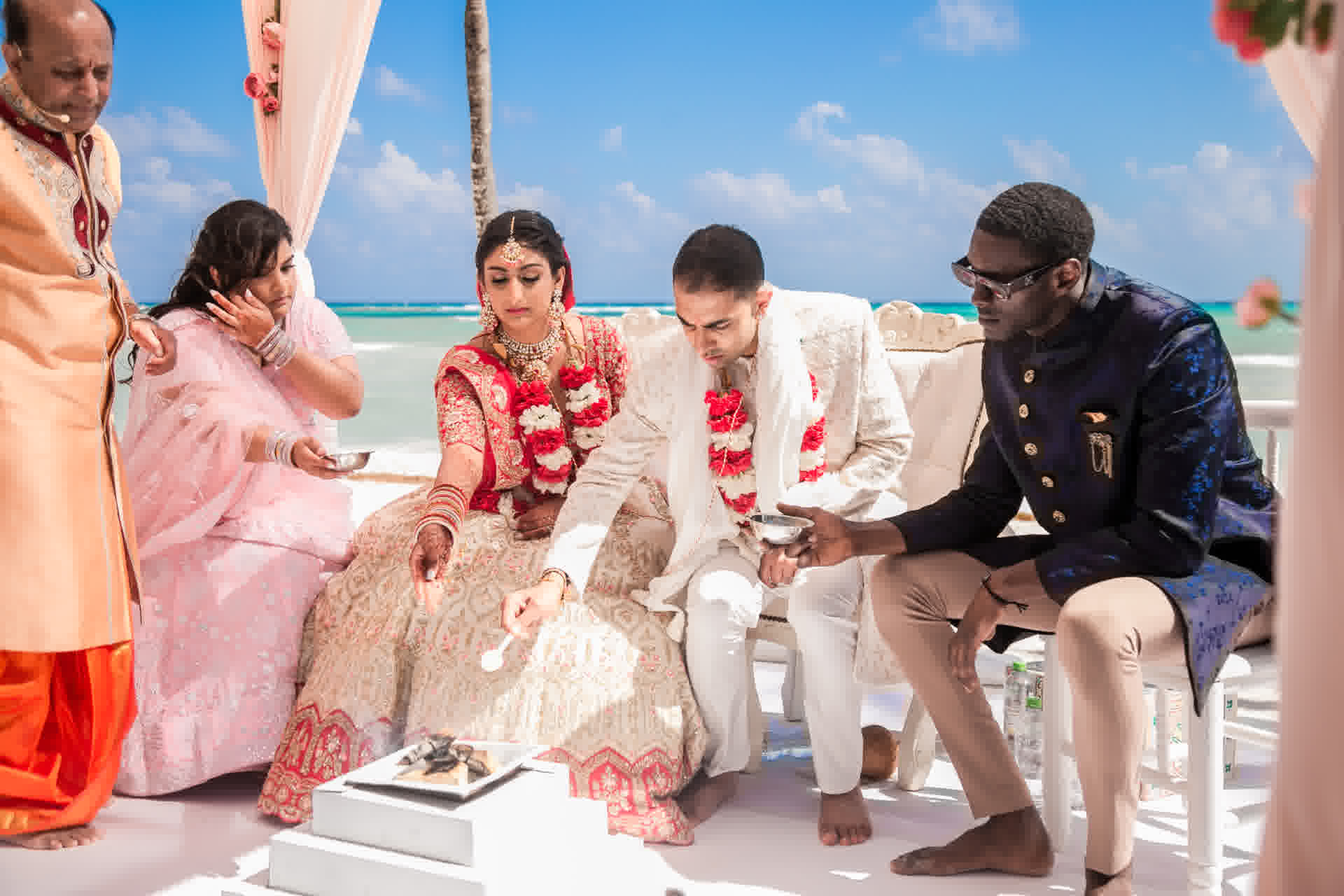
Family naming, hosting language, ceremony-specific references, and ceremonial terms vary widely. Confirm meaningful wording with your families and officiant, and ask your planner to review logistical details. The examples below are adaptable frameworks, not tradition-specific or etiquette rules.
Decide What the Main Invitation Must Accomplish
The central invitation should communicate the couple, hosts if desired, destination, primary dates, and response path. It does not need to carry every transportation instruction or event detail. Place changing information on the wedding website or in a guest update that can be revised.

Choose the voice before the format
Decide whether the celebration should sound traditional, modern, intimate, exuberant, or quietly luxurious. Then test every line against that voice. Formal wording can still feel warm, and contemporary wording can still honor family.
Define how families will be named
Some invitations begin with parents or families, some center the couple, and others combine both. Discuss names, order, titles, and spelling directly with those involved. There is no single correct structure for every Indian wedding or family.
Our South Asian weddings in Cancun page offers planning context for multi-day photography and film.
Use a Clear Main Invitation Structure
A flexible structure is: welcome or hosting line, couple’s names, invitation line, celebration description, destination and dates, and response direction. Keep the visual design readable, especially if guests will view it on a phone.
Modern destination wording example
Together with our families, we invite you to join us in Cancun, Mexico, as we celebrate the wedding of Priya and Arjun. Please share three joyful days with us, from Thursday, November 12 through Saturday, November 14. Event details and travel information are available on our wedding website. Kindly respond by August 15.
Family-forward wording example
The Mehta and Rao families joyfully invite you to celebrate the marriage of Priya Mehta and Arjun Rao in Cancun, Mexico. We look forward to welcoming you for a weekend of family, tradition, and celebration, November 12 to 14. Please visit our wedding website for the complete schedule and RSVP.
Intimate wording example
With full hearts, Priya and Arjun invite you to join their closest family and friends for a destination wedding in Cancun. Celebrate with us from November 12 to 14 as we begin our next chapter by the sea. Details and RSVP are available at our wedding website.
Replace every detail with confirmed information. If a phrase has ceremony-specific or ceremonial significance, ask the appropriate family member or officiant to approve it before printing.
Write Separate Cards for Different Events
A multi-event invitation suite becomes easier to read when each event has its own concise card or digital section. Use the event name your families prefer, then include date, time, location, attire guidance, transportation notes, and whether the gathering is limited to specific invitees.
Welcome event wording
Welcome to Cancun. Join us for drinks, dinner, and an evening with family and friends as the celebration begins. Thursday, November 12 at 6:00 p.m. Resort Garden. Festive resort attire.
Ceremony wording
Please join us for the wedding ceremony of Priya and Arjun. Saturday, November 14 at 4:00 p.m. Ocean Terrace. Guest seating begins at 3:30 p.m. Ceremony attire guidance is available on our wedding website.
Reception wording
Following the ceremony, celebrate with us over dinner, performances, and dancing. Saturday, November 14 at 7:00 p.m. Grand Ballroom. Evening attire.
These samples intentionally avoid assuming that every family uses the same events or dress language. Adapt the names and context to your celebration.
Make Travel Information Easy to Find
Destination guests need dependable information about arrival airports, lodging, booking instructions, transfers, event transportation, and the deadline for reserving accommodations. Keep the invitation concise and point to one current source.
Use a short travel line
Travel, accommodations, and airport transfer guidance can be found at our wedding website. Please reserve your stay by the listed deadline and check the site before departure for updates.
Separate confirmed facts from recommendations
Do not present an estimate or preference as a guarantee. If transportation schedules or venue procedures may change, say when final details will be shared. Your planner and travel professional should verify operational information. For destination context, see the guide to the best months for a Cancun wedding.
Explain Attire With Respect and Specificity
Attire guidance should help guests feel prepared, not judged. Avoid assuming everyone owns tradition-specific clothing or knows what an event name implies. Explain the desired level of formality, practical considerations, and whether traditional attire is welcomed.
A useful structure is: event mood, formality, weather or venue note, and optional tradition-specific guidance. For example: Colorful festive attire is welcomed. Traditional Indian clothing or cocktail attire are both appropriate. The event will be outdoors on a lawn, so choose footwear accordingly. Confirm the exact wording with your families and planner.
Manage RSVP and Guest Questions
For multi-day weddings, collect attendance for each invited event, travel dates, accommodation information if needed for logistics, dietary information, and transportation choices. Ask only for information you genuinely need, explain how it will be used, and protect guest privacy.
Give guests a named contact or dedicated email for practical questions. This keeps the couple from answering the same message repeatedly and helps the planning team detect recurring confusion. Couples can use the ultimate wedding photography guide while preparing the invitation timeline, then keep guest-facing information limited to what invitees need.
Frequently Asked Questions
Do we need to list every event on the main invitation?
No. Keep the primary invitation focused and use separate cards or a wedding website for the complete schedule. Make sure each guest sees only the events to which they are invited.
Whose names should appear first?
That is a family and personal decision. Discuss hosting, tradition, relationships, and preferred formality, then use one consistent structure across the suite.
How should we describe an adults-only event?
Use direct, gracious wording on the invitation or RSVP, and address invitations precisely. Your planner can help adapt the message to the guest list and local arrangements.
Should invitation wording be bilingual?
It can be if that serves your guests and families. Use professional review where accuracy and nuance matter, and make both versions equally clear and easy to read.
When should we share the final event schedule?
Share dates and major windows early, then provide the detailed schedule when logistics are confirmed. Use one digital source for later updates so guests do not rely on an outdated version.
Your invitation is the first chapter of the celebration. When its language is personal, inclusive, and operationally clear, guests can arrive with confidence and focus on the meaning of the days ahead. To discuss how your full Cancun wedding story can be preserved through photography and film, contact Xavier Bau Weddings.